

Human BMPR1A Protein, hFc Tag
-
产品编号
KMP2609
-
别名
1A型骨形态发生蛋白受体, Human BMPR1A Protein, hFc Tag, BMPR1A
-
目录价格
联系客服获取报价RMB
-
规格
- 50ug
- 100ug
- 200ug
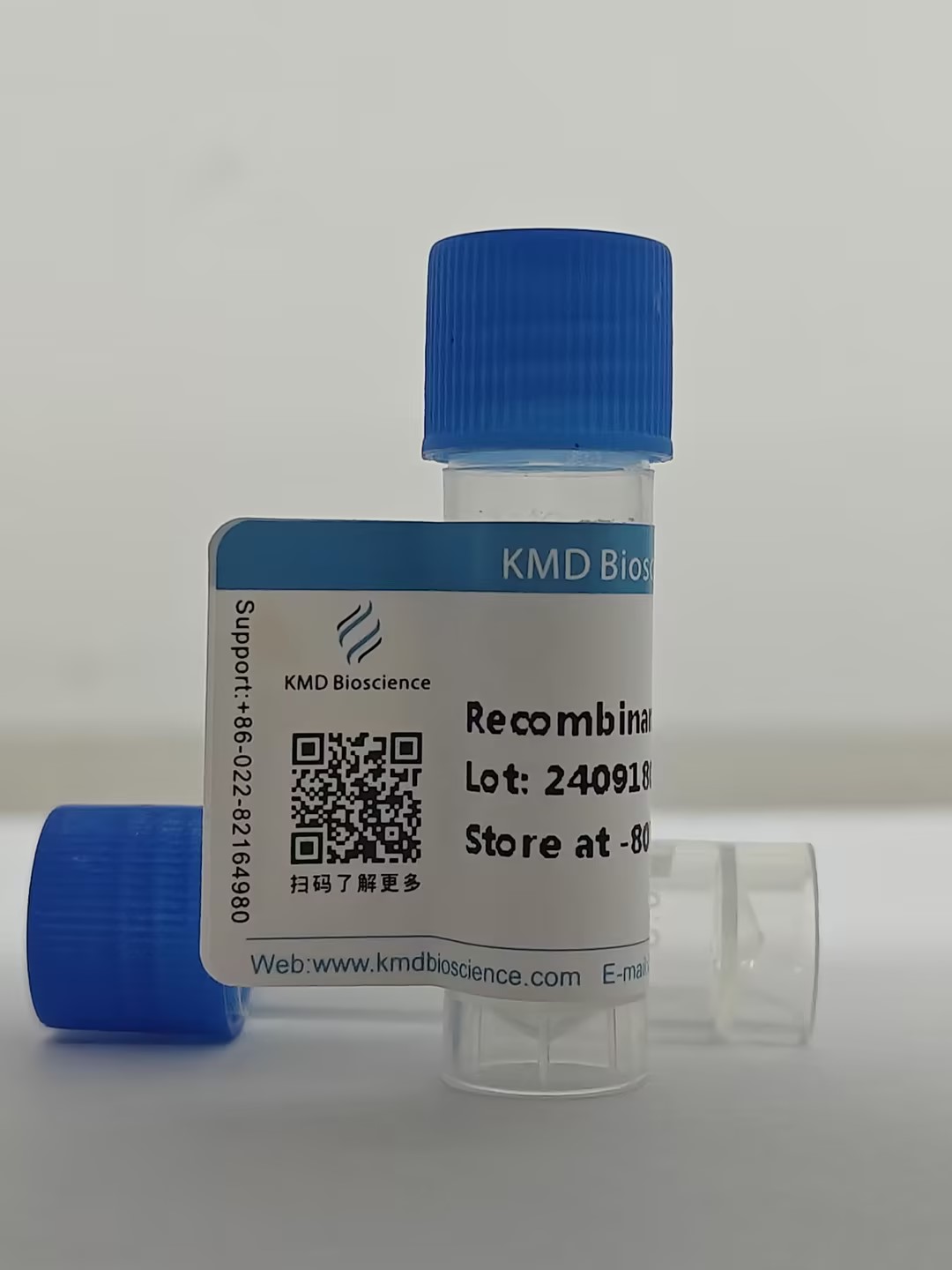
| Alias | 1A型骨形态发生蛋白受体, Human BMPR1A Protein, hFc Tag, BMPR1A |
| Catalog Number | KMP2609 |
| Product Description | The Human BMPR1A Protein(KMP2609) is produced in HEK293 Cells. The target gene encoding the human BMPR1A (NP_004320.2) (Met1-Arg152) is expressed with the Fc region of human IgG1 at the C-terminus. |
| Molecular Name | BMPR1A |
| Species | Human |
| Host | HEK293 Cells |
| Size | 50ug, 100ug, 200ug |
| Protein Family | Other protein |
| Purity | >95% as determined by SDS-PAGE |
| Concentration | 联系销售经理获得最新批次的浓度 |
| Purification | Affinity purification |
| Endotoxin | <1.0 EU/ug determined by the LAL method |
| Formulation | PBS, pH7.4 |
| Background | Activin receptor-Like Kinase 3 (ALK-3), also known as Bone Morphogenetic Protein Receptor, type IA (BMPR1A), is a type I receptor for bone morphogenetic proteins (BMPs) which belong to the transforming growth factor beta (TGF-β) superfamily. The BMP receptors form a subfamily of transmembrane serine/threonine kinases including the type I receptors BMPR1A and BMPR1B and the type II receptor BMPR2. ALK-3/BMPR1A is expressed in the epithelium during branching morphogenesis. Deletion of BMPR1A in the epithelium with an Sftpc-cre transgene leads to dramatic defects in lung development. ALK-3 and ALK-6 share a high degree of homology, yet possess distinct signaling roles. The transforming growth factor (TGF)-beta type III receptor (TbetaRIII) enhanced both ALK-3 and ALK-6 signaling. TbetaRIII associated with ALK-3 primarily through their extracellular domains, whereas its interaction with ALK-6 required both the extracellular and cytoplasmic domains. ALK-3 plays an essential role in the formation of embryonic ventral abdominal wall, and abrogation of BMP signaling activity due to gene mutations in its signaling components could be one of the underlying causes of omphalocele at birth. The type IA BMP receptor, ALK-3 was specifically required at mid-gestation for normal development of the trabeculae, compact myocardium, interventricular septum, and endocardial cushion. Cardiac muscle lacking ALK-3 was specifically deficient in expressing TGFbeta2, an established paracrine mediator of cushion morphogenesis. Hence, ALK-3 is essential, beyond just the egg cylinder stage, for myocyte-dependent functions and signals in cardiac organogenesis. |
| Application | WB, ELISA |
| Recommended Dilution | ELISA: 1:100-1:1000 |
| Cross-reactivity | No cross-reactivity with other antigens or proteins. |
| Predicted Molecular Weight | 40.9 kDa |
| Predicted N Terminus | Met |
| Reconstitution | Not applicable. The product is supplied as a ready-to-use liquid formulation. |
| Storage Condition | Aliquot and store at -20℃ to -80℃. Avoid repeated freezing and thawing cycles. |
| Remarks | 收到产品后请立即按保存条件储存;使用前短暂离心,使内容物集中于管底;避免反复冻融。 |
| Shipping Condition | In general, recombinant proteins are provided as lyophilized powder which are shipped at ambient temperature. If supplied as liquid, the proteins will be shipped with dry ice. |
| Stability | Samples are stable for up to twelve months from date of receipt at -20℃ to -80℃. Store it under sterile conditions at -20℃ to -80℃. It is recommended that the protein be aliquoted for optimal storage. Avoid repeated freeze-thaw cycles. |
| Molecular Weight | 40.9 kDa |
| Cross-reactivity | No cross-reactivity with other antigens or proteins. |
| Note | 仅供科研使用 |
| ELISA IC50(ppb) | ≥ 1:1000 |
| Function | Activin receptor-Like Kinase 3 (ALK-3), also known as Bone Morphogenetic Protein Receptor, type IA (BMPR1A), is a type I receptor for bone morphogenetic proteins (BMPs) which belong to the transforming growth factor beta (TGF-β) superfamily. The BMP receptors form a subfamily of transmembrane serine/threonine kinases including the type I receptors BMPR1A and BMPR1B and the type II receptor BMPR2. ALK-3/BMPR1A is expressed in the epithelium during branching morphogenesis. Deletion of BMPR1A in the epithelium with an Sftpc-cre transgene leads to dramatic defects in lung development. ALK-3 and ALK-6 share a high degree of homology, yet possess distinct signaling roles. The transforming growth factor (TGF)-beta type III receptor (TbetaRIII) enhanced both ALK-3 and ALK-6 signaling. TbetaRIII associated with ALK-3 primarily through their extracellular domains, whereas its interaction with ALK-6 required both the extracellular and cytoplasmic domains. ALK-3 plays an essential role in the formation of embryonic ventral abdominal wall, and abrogation of BMP signaling activity due to gene mutations in its signaling components could be one of the underlying causes of omphalocele at birth. The type IA BMP receptor, ALK-3 was specifically required at mid-gestation for normal development of the trabeculae, compact myocardium, interventricular septum, and endocardial cushion. Cardiac muscle lacking ALK-3 was specifically deficient in expressing TGFbeta2, an established paracrine mediator of cushion morphogenesis. Hence, ALK-3 is essential, beyond just the egg cylinder stage, for myocyte-dependent functions and signals in cardiac organogenesis. |
| Product Declaration | 该产品仅供科研使用,不可直接用于人体或注射。 |
| Temperature Range | -20℃ ~ -80℃ |
| Solubility | 产品为即用型液体,无需复溶。 |
| Appearance | Liquid |
| Product Full Name | Human BMPR1A Protein |
| Preservative Solution | PBS, pH7.4 |
| Usage Method | 冻干粉请按“复溶”说明用无菌去离子水复溶后使用,液体产品可直接使用;具体工作浓度请参考“推荐稀释比例”。 |
| Target | BMPR1A |


销售微信

官方公众号


 0


