Human Fibronectin Protein, His Tag
-
产品编号
KMP2550
-
别名
纤粘蛋白, Human Fibronectin Protein, His Tag, Fibronectin
-
目录价格
联系客服获取报价RMB
-
规格
- 50ug
- 100ug
- 200ug
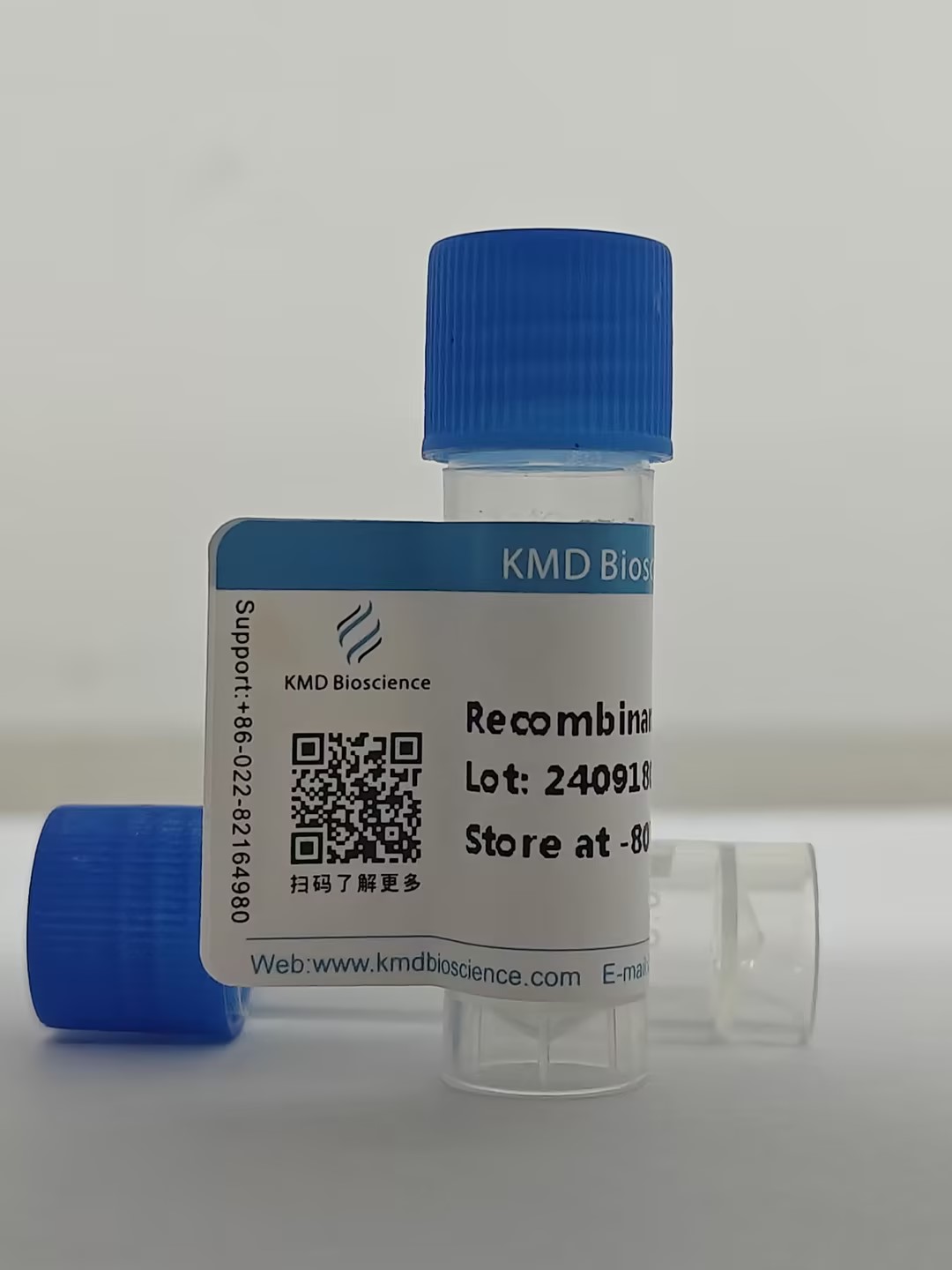
| Alias | 纤粘蛋白, Human Fibronectin Protein, His Tag, Fibronectin |
| Catalog Number | KMP2550 |
| Product Description | The Human Fibronectin Protein(KMP2550) is produced in HEK293 Cells. The target gene encoding the human FN1 (NP_997647.1) (Asn1722-Thr1811) is expressed with a polyhistidine tag at the C-terminus. |
| Molecular Name | Fibronectin |
| Species | Human |
| Host | HEK293 Cells |
| Size | 50ug, 100ug, 200ug |
| Protein Family | Other protein |
| Purity | >95% as determined by SDS-PAGE |
| Concentration | 联系销售经理获得最新批次的浓度 |
| Purification | Affinity purification |
| Endotoxin | <1.0 EU/ug determined by the LAL method |
| Formulation | PBS, pH7.4 |
| Background | Fibronectin (FN) is a glycoprotein component of the extracellular matrix of the extracellular matrix (ECM) with roles in embryogenesis, development, and wound healing. More recently, FN has emerged as player in platelet thrombus formation and diseases associated with thrombosis including vascular remodeling, atherosclerosis, and cardiac repair following a myocardial infarct. Each monomer of FN consists of three types of homologous repeating units, that is 12 type I repeats, two type II repeats and 15-17 type III repeats. The occurrence of multiple isoforms results from alternative mRNA splicing of the ED-A, ED-B and III-CS regions, and subsequent post-translational modification. As an ECM component and one of the primary cell adhesion molecules, Fibronectin can be a ligand for fibrin, heparin, chondroitin sulfate, collagen/gelatin, as well as many integrin receptors through which FN mediates the variety of cellular signaling pathways. The study of solid human tumors showed among the early signs of malignant transformation the fragmentation of pericellular FN, concommitent with the increase of its production by the peritumoral stroma. These results should encourage further investigations concerning the potential importance of Fn production and breakdown during cancer progression. FN1 expression has been described to increase significantly from the morula towards the early blastocyst stage, suggesting that FN1 may also be involved in early blastocyst formation. The fragment 2 of FN comprises the first 7 FN type III repeats and is suggested to be important for self association during fibril growth via the key module III2. |
| Application | WB, ELISA |
| Recommended Dilution | ELISA: 1:100-1:1000 |
| Cross-reactivity | No cross-reactivity with other antigens or proteins. |
| Predicted Molecular Weight | 11.3 kDa |
| Predicted N Terminus | Asn 1722 |
| Reconstitution | Not applicable. The product is supplied as a ready-to-use liquid formulation. |
| Storage Condition | Aliquot and store at -20℃ to -80℃. Avoid repeated freezing and thawing cycles. |
| Remarks | 收到产品后请立即按保存条件储存;使用前短暂离心,使内容物集中于管底;避免反复冻融。 |
| Shipping Condition | In general, recombinant proteins are provided as lyophilized powder which are shipped at ambient temperature. If supplied as liquid, the proteins will be shipped with dry ice. |
| Stability | Samples are stable for up to twelve months from date of receipt at -20℃ to -80℃. Store it under sterile conditions at -20℃ to -80℃. It is recommended that the protein be aliquoted for optimal storage. Avoid repeated freeze-thaw cycles. |
| Molecular Weight | 11.3 kDa |
| Cross-reactivity | No cross-reactivity with other antigens or proteins. |
| Note | 仅供科研使用 |
| ELISA IC50(ppb) | ≥ 1:1000 |
| Function | Fibronectin (FN) is a glycoprotein component of the extracellular matrix of the extracellular matrix (ECM) with roles in embryogenesis, development, and wound healing. More recently, FN has emerged as player in platelet thrombus formation and diseases associated with thrombosis including vascular remodeling, atherosclerosis, and cardiac repair following a myocardial infarct. Each monomer of FN consists of three types of homologous repeating units, that is 12 type I repeats, two type II repeats and 15-17 type III repeats. The occurrence of multiple isoforms results from alternative mRNA splicing of the ED-A, ED-B and III-CS regions, and subsequent post-translational modification. As an ECM component and one of the primary cell adhesion molecules, Fibronectin can be a ligand for fibrin, heparin, chondroitin sulfate, collagen/gelatin, as well as many integrin receptors through which FN mediates the variety of cellular signaling pathways. The study of solid human tumors showed among the early signs of malignant transformation the fragmentation of pericellular FN, concommitent with the increase of its production by the peritumoral stroma. These results should encourage further investigations concerning the potential importance of Fn production and breakdown during cancer progression. FN1 expression has been described to increase significantly from the morula towards the early blastocyst stage, suggesting that FN1 may also be involved in early blastocyst formation. The fragment 2 of FN comprises the first 7 FN type III repeats and is suggested to be important for self association during fibril growth via the key module III2. |
| Product Declaration | 该产品仅供科研使用,不可直接用于人体或注射。 |
| Temperature Range | -20℃ ~ -80℃ |
| Solubility | 产品为即用型液体,无需复溶。 |
| Appearance | Liquid |
| Product Full Name | Human Fibronectin Protein |
| Preservative Solution | PBS, pH7.4 |
| Usage Method | 冻干粉请按“复溶”说明用无菌去离子水复溶后使用,液体产品可直接使用;具体工作浓度请参考“推荐稀释比例”。 |
| Target | Fibronectin |


销售微信

官方公众号


 0