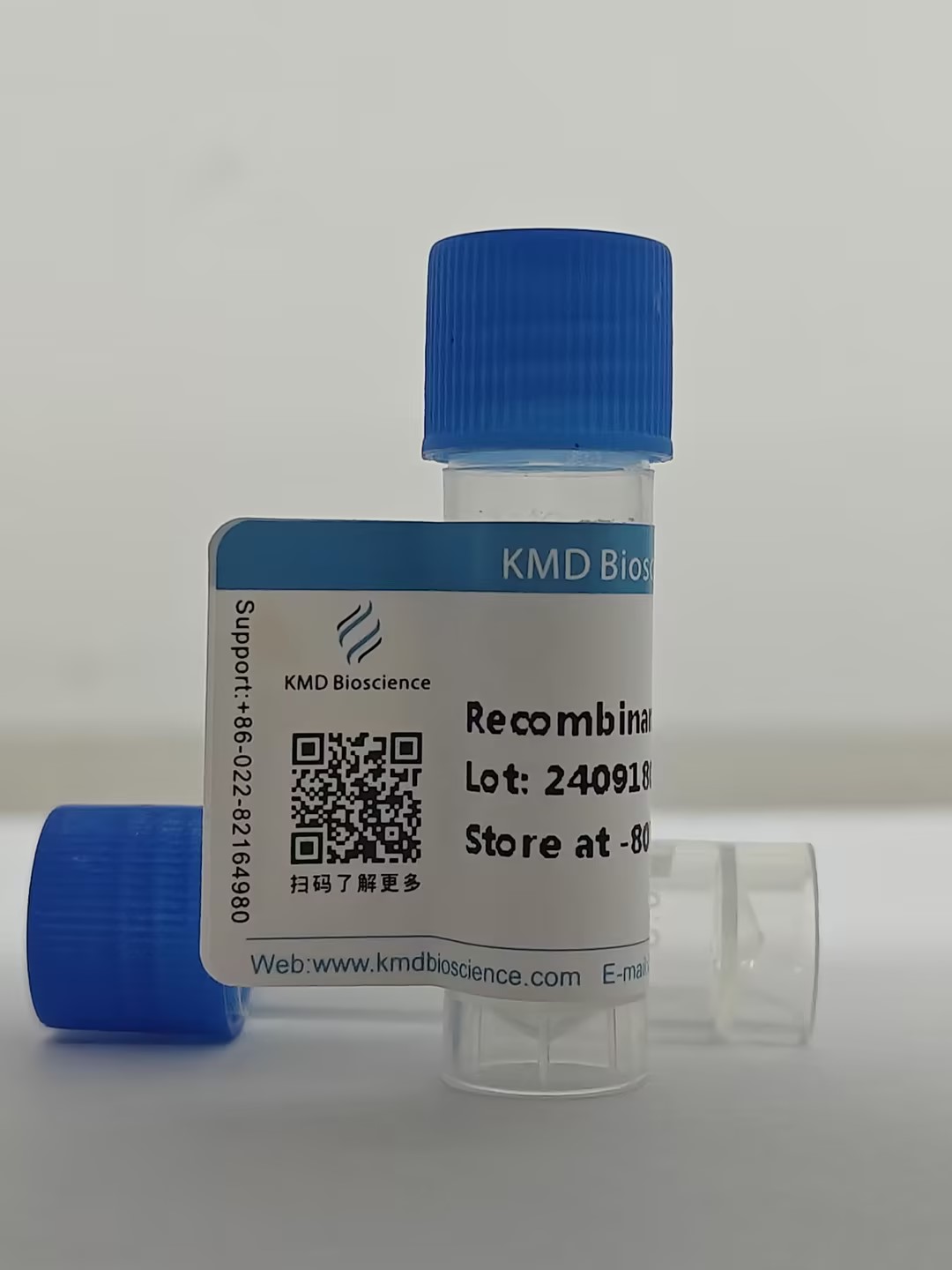
Rabbit Anti-TRPV1 Polyclonal Antibody
-
产品编号
PAV4146
-
别名
transient receptor potential cation channel subfamily V member 1, VR1
-
目录价格
InquiryRMB
-
规格
- 100ul

| Alias | transient receptor potential cation channel subfamily V member 1, VR1 |
| Catalog Number | PAV4146 |
| Product Description | Rabbit polyclonal antibody raised against human TRPV1 (Transient receptor potential cation channel subfamily V member 1). Affinity purified from rabbit antiserum by antigen-specific affinity chromatography. Validated applications: WB, ELISA. Supplied as liquid in PBS containing 50% glycerol and 0.02% sodium azide at 1 mg/ml. |
| Molecular Name | TRPV1 |
| Species | Mouse, Rat |
| Host | Rabbit |
| Size | 100ul |
| Clonity | Polyclonal |
| Protein Family | 离子通道 |
| Concentration | 1 mg/ml |
| Purification | affinity-chromatography |
| Formulation | supply in PBS containing 50% glycerol, and 0.02% sodium azide. |
| Background | Capsaicin, the main pungent ingredient in hot chili peppers, elicits a sensation of burning pain by selectively activating sensory neurons that convey information about noxious stimuli to the central nervous system. The protein encoded by this gene is a receptor for capsaicin and is a non-selective cation channel that is structurally related to members of the TRP family of ion channels. This receptor is also activated by increases in temperature in the noxious range, suggesting that it functions as a transducer of painful thermal stimuli in vivo. Four transcript variants encoding the same protein, but with different 5' UTR sequence, have been described for this gene. [provided by RefSeq, Jul 2008] |
| Immunogen | This antibody was raised against from part region of human TRPV1 protein (UniProt: Q8NER1) |
| Application | WB, ELISA |
| Recommended Dilution | WB 1:500-2000 ELISA 1:5000-20000 |
| Gene ID | 7442 |
| Tag | Unconjugated |
| Cross-reactivity | Mouse, Rat |
| Predicted Molecular Weight | ≈95.0 kDa |
| Storage Condition | Store at 4℃ for for short term storage. It is recommended to aliquote to ~10ul per vial and store at -20℃ for long term storage. Avoid repeated freezing and thawing cycles. |
| Shipping Condition | This product is shipped on blue ice. |
| Molecular Weight | 95.0 kDa |
| Cross-reactivity | Mouse, Rat |
| Uniprot ID | Q8NER1 |
| Note | Gene ID: 7442; UniProt: Q8NER1; Chromosome: 17p13.2; Predicted MW: 95.0 kDa |
| Function | Non-selective calcium permeant cation channel involved in detection of noxious chemical and thermal stimuli. Seems to mediate proton influx and may be involved in intracellular acidosis in nociceptive neurons. Involved in mediation of inflammatory pain and hyperalgesia. Sensitized by a phosphatidylinositol second messenger system activated by receptor tyrosine kinases, which involves PKC isozymes and PCL. Activated by vanilloids, like capsaicin, and temperatures higher than 42 degrees Celsius. Upon activation, exhibits a time- and Ca(2+)-dependent outward rectification, followed by a long-lasting refractory state. Mild extracellular acidic pH (6.5) potentiates channel activation by noxious heat and vanilloids, whereas acidic conditions (pH <6) directly activate the channel. Can be activated by endogenous compounds, including 12-hydroperoxytetraenoic acid and bradykinin. Acts as ionotropic endocannabinoid receptor with central neuromodulatory effects. |
| Product Declaration | 本产品仅用于研究用途(RUO)。不能用于诊断或直接用于人体实验。 |
| Product Full Name | Rabbit Anti-Human TRPV1 Polyclonal Antibody |
| Target | TRPV1 |


销售微信

官方公众号


 0