Recombinant Human CD264/TNFRSF10D Protein, His Tag
-
产品编号
KMH413
-
别名
DCR2, CD264, TRUNDD, TRAILR4, TRAIL R4, TNF receptor superfamily member 10d
-
规格
- 50ug
- 100ug
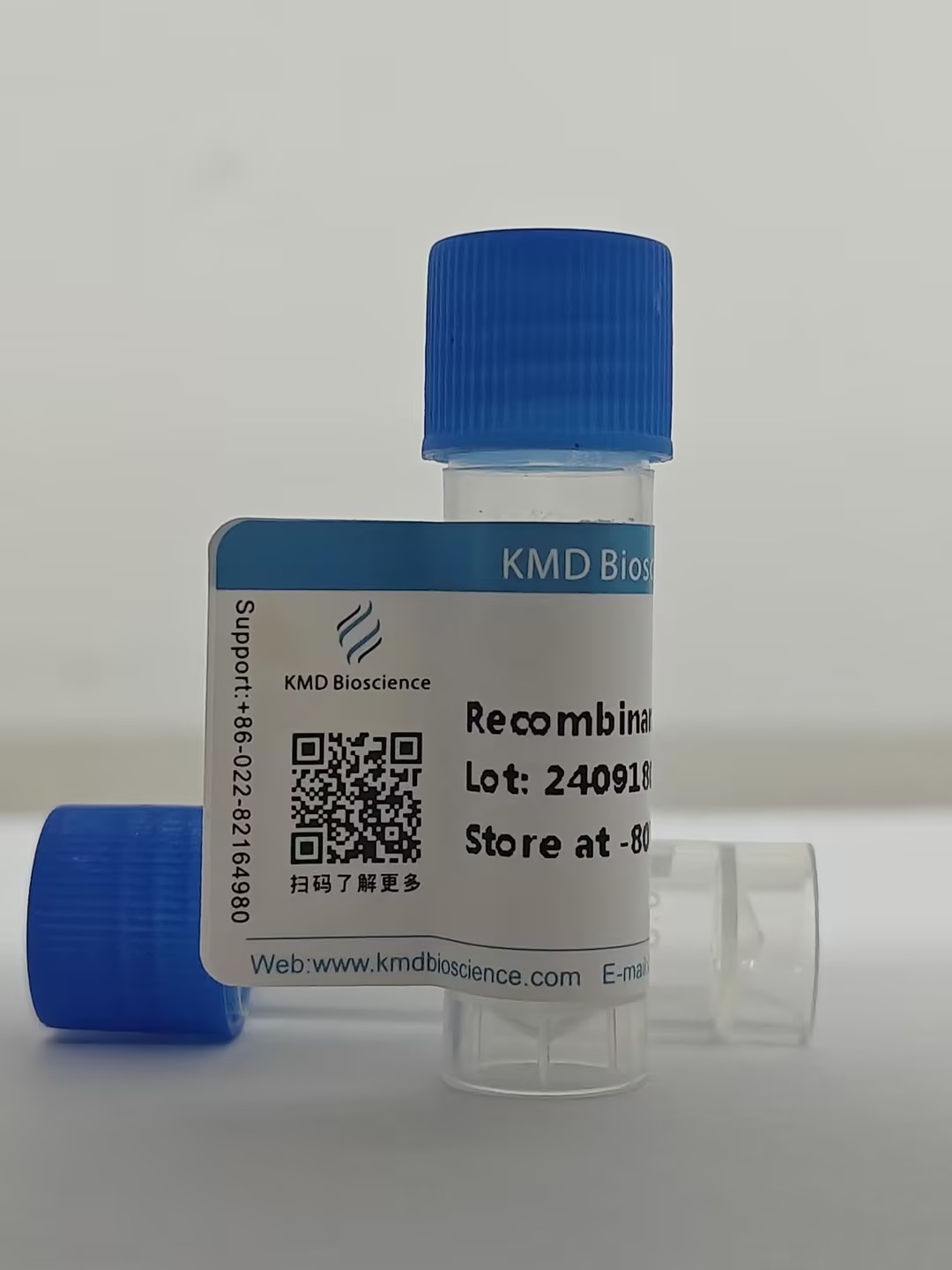
| Alias | DCR2, CD264, TRUNDD, TRAILR4, TRAIL R4, TNF receptor superfamily member 10d |
| Catalog Number | KMH413 |
| Molecular Name | TNFRSF10D |
| Species | Human |
| Host | Mammalian cells |
| Size | 50ug, 100ug |
| Protein Family | CD molecule |
| Purity | ≥90% as determined by SDS-PAGE |
| Purification | Affinity Purification |
| Endotoxin | < 1.0 EU per ug of the protein as determined by the LAL method. |
| Formulation | PBS |
| Background | TNF-related apoptosis-inducing ligand receptor 4 (TRAIL R4) is a decoy receptor that negatively regulate TRAIL-induced cytotoxicity by competing for ligand binding with TRAIL-R1 and TRAIL-R2.1 TRAIL R4 is expressed mainly on CD8+ and NK cells and induces apoptosis in many tumour cells, but not in normal cells. TRAIL-R4 contains partially truncated death domain and therefore is unable to induce apoptosis and serves as a negative regulator of apoptotic signaling by impairment death-inducing signaling complex (DISC) processing. |
| Storage Condition | Store the product under sterile conditions after opening at -20℃ to -80℃ for 12 months. Avoid repeated freeze-thaw cycles. |
| Shipping Condition | This product is shipped on ice packs or dry ice. |
| Molecular Weight | 23.21 kDa |
| Note | 仅供科研使用 |


销售微信

官方公众号


 0
0