Recombinant Human CD84 Protein, His Tag
-
产品编号
KMH249
-
别名
LY9B, hCD84, mCD84, SLAMF5, CD84 molecule
-
规格
- 50ug
- 100ug
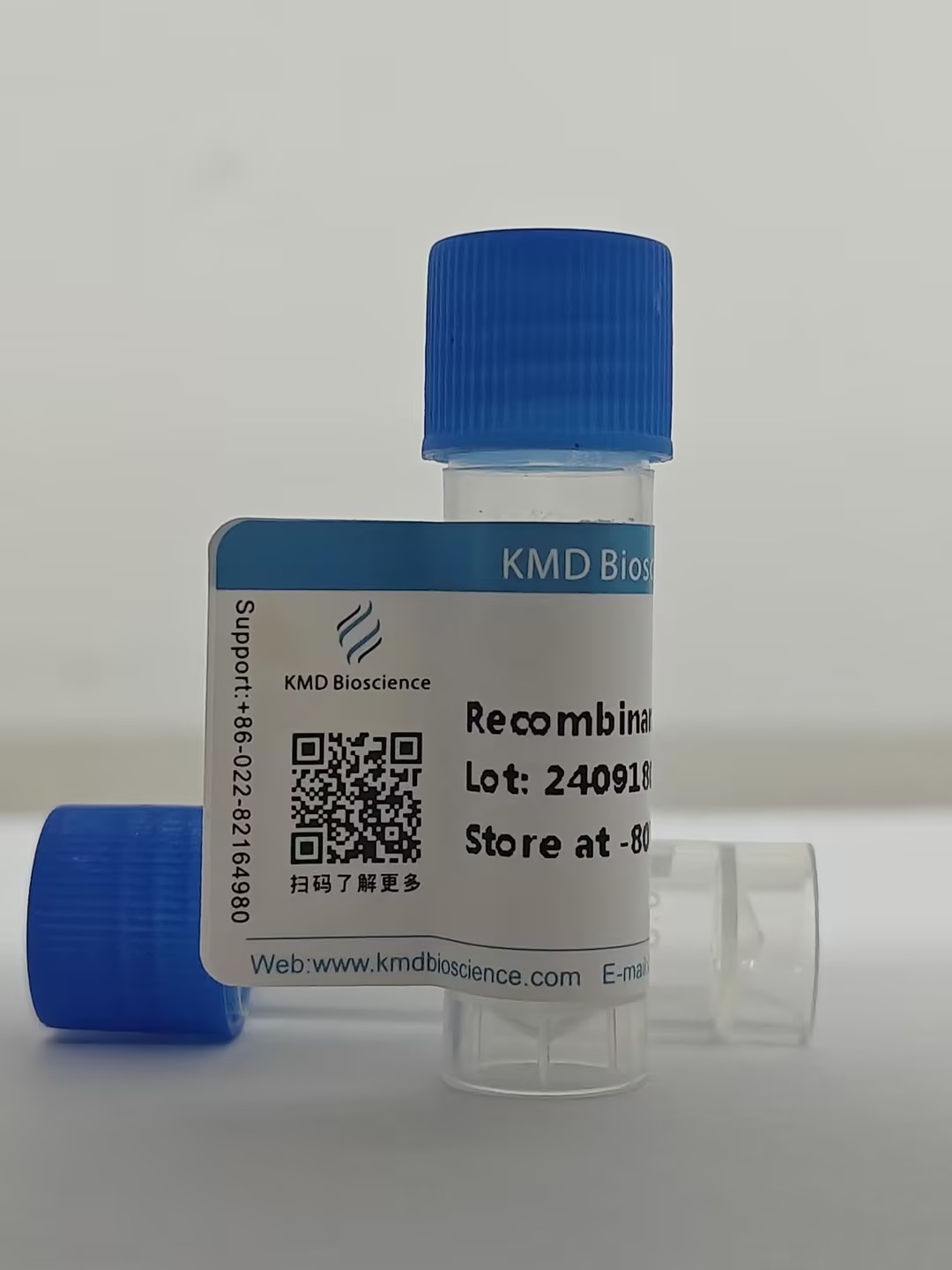
| Alias | LY9B, hCD84, mCD84, SLAMF5, CD84 molecule |
| Catalog Number | KMH249 |
| Molecular Name | CD84 |
| Species | Human |
| Host | Mammalian cells |
| Size | 50ug, 100ug |
| Protein Family | CD molecule |
| Purity | ≥90% as determined by SDS-PAGE |
| Purification | Affinity Purification |
| Endotoxin | < 1.0 EU per ug of the protein as determined by the LAL method. |
| Formulation | PBS |
| Background | Human CD83 is a 4-5 kDa member of the Siglec (or sialic-acid-binding immunoglobulin-like lectin) family of transmembrane proteins. CD83 is a primary marker for dendritic cells. It is also found on B cells, neutrophils, monocytes and macrophages. Except for dendritic cells, CD83 expression is often transient. CD83 binds to sialic acids on target cells. Membrane CD83 promotes T cell proliferation, particularly of CD8+ cytotoxic T cells. Soluble CD83 is immunosuppressive and blocks T cell activation. On monocytes, CD83 is suggested to drive monocytes into a fibrocyte phenotype. A lack of membrane-expressed CD83 leads to an unusual IL-4/IL-1 producing CD4+ T cell phenotype. |
| Storage Condition | Store the product under sterile conditions after opening at -20℃ to -80℃ for 12 months. Avoid repeated freeze-thaw cycles. |
| Shipping Condition | This product is shipped on ice packs or dry ice. |
| Molecular Weight | 24.75 kDa |
| Note | 仅供科研使用 |


销售微信

官方公众号


 0
0