

Human CSF1R Protein, His Tag, Avi Tag
-
产品编号
KMP2505
-
别名
集落刺激因子1受体, Human CSF1R Protein, His Tag, Avi Tag, CSF1R
-
目录价格
联系客服获取报价RMB
-
规格
- 50ug
- 100ug
- 200ug
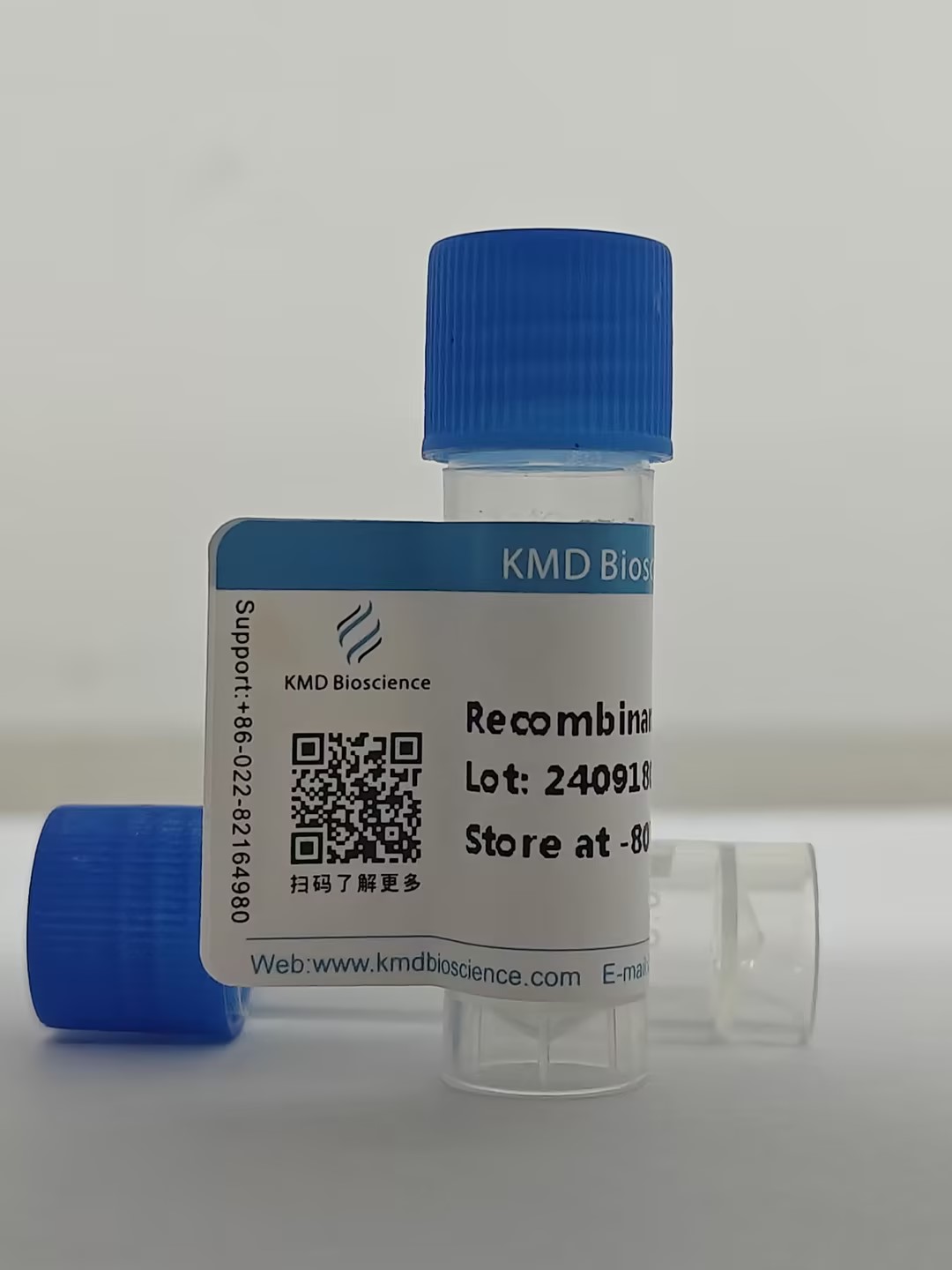
| Alias | 集落刺激因子1受体, Human CSF1R Protein, His Tag, Avi Tag, CSF1R |
| Catalog Number | KMP2505 |
| Product Description | The Human CSF1R Protein(KMP2505) is produced in HEK293 Cells. The target gene encoding the human CSF1R (NP_005202.2)(Met1-Glu512) is expressed with a C-terminal polyhistidine tag followed by an Avi tag. The expressed protein is biotinylated in vivo by the Biotin-Protein ligase (BirA enzyme) which is co-expressed. |
| Molecular Name | CSF1R |
| Species | Human |
| Host | HEK293 Cells |
| Size | 50ug, 100ug, 200ug |
| Protein Family | Other protein |
| Purity | >95% as determined by SDS-PAGE |
| Concentration | 联系销售经理获得最新批次的浓度 |
| Purification | Affinity purification |
| Endotoxin | <1.0 EU/ug determined by the LAL method |
| Formulation | PBS, pH7.4 |
| Background | M-CSFR encoded by the proto-oncogene c-fms is the receptor for colony stimulating factor 1 (CSF1R), a cytokine involved in the proliferation, differentiation, and activation of macrophages. This cell surface glycoprotein is consisted by an extracellular ligand-binding domain, a single membrane-spanning segment, and an intracellular tyrosine kinase domain. Binding of CSF1 activates the receptor kinase, leading to "autophosphorylation" of receptor subunits and the concomitant phosphorylation of a series of cellular proteins on tyrosine residues. CSF1R is a tyrosine kinase receptor that is absolutely required for macrophage differentiation and thus occupies a central role in hematopoiesis. CSF1 and its receptor (CSF1R, product of c-fms proto-oncogene) were initially implicated as essential for normal monocyte development as well as for trophoblastic implantation. This apparent role for CSF1/CSF1R in normal mammary gland development is very intriguing because this receptor/ligand pair has also been found to be important in the biology of breast cancer in which abnormal expression of CSF1 and its receptor correlates with tumor cell invasiveness and adverse clinical prognosis. Tumor cell expression of CSF1R is under the control of several steroid hormones (glucocorticoids and progestins) and the binding of several bHLH transcription factors, while tumor cell expression of CSF-1 appears to be regulated by other hormones, some of which are involved in normal lactogenic differentiation. However, studies have demonstrated that CSF1 and CSF1R have additional roles in mammary gland development during pregnancy and lactation. The role of CSF1 and CSF1R in normal and neoplastic mammary development that may elucidate potential relationships of growth factor-induced biological changes in the breast during pregnancy and tumor progression. |
| Application | WB, ELISA |
| Recommended Dilution | ELISA: 1:100-1:1000 |
| Cross-reactivity | No cross-reactivity with other antigens or proteins. |
| Predicted Molecular Weight | 57.76 kDa |
| Predicted N Terminus | Met |
| Reconstitution | Not applicable. The product is supplied as a ready-to-use liquid formulation. |
| Storage Condition | Aliquot and store at -20℃ to -80℃. Avoid repeated freezing and thawing cycles. |
| Remarks | 收到产品后请立即按保存条件储存;使用前短暂离心,使内容物集中于管底;避免反复冻融。 |
| Shipping Condition | In general, recombinant proteins are provided as lyophilized powder which are shipped at ambient temperature. If supplied as liquid, the proteins will be shipped with dry ice. |
| Stability | Samples are stable for up to twelve months from date of receipt at -20℃ to -80℃. Store it under sterile conditions at -20℃ to -80℃. It is recommended that the protein be aliquoted for optimal storage. Avoid repeated freeze-thaw cycles. |
| Molecular Weight | 57.76 kDa |
| Cross-reactivity | No cross-reactivity with other antigens or proteins. |
| Note | 仅供科研使用 |
| ELISA IC50(ppb) | ≥ 1:1000 |
| Function | M-CSFR encoded by the proto-oncogene c-fms is the receptor for colony stimulating factor 1 (CSF1R), a cytokine involved in the proliferation, differentiation, and activation of macrophages. This cell surface glycoprotein is consisted by an extracellular ligand-binding domain, a single membrane-spanning segment, and an intracellular tyrosine kinase domain. Binding of CSF1 activates the receptor kinase, leading to "autophosphorylation" of receptor subunits and the concomitant phosphorylation of a series of cellular proteins on tyrosine residues. CSF1R is a tyrosine kinase receptor that is absolutely required for macrophage differentiation and thus occupies a central role in hematopoiesis. CSF1 and its receptor (CSF1R, product of c-fms proto-oncogene) were initially implicated as essential for normal monocyte development as well as for trophoblastic implantation. This apparent role for CSF1/CSF1R in normal mammary gland development is very intriguing because this receptor/ligand pair has also been found to be important in the biology of breast cancer in which abnormal expression of CSF1 and its receptor correlates with tumor cell invasiveness and adverse clinical prognosis. Tumor cell expression of CSF1R is under the control of several steroid hormones (glucocorticoids and progestins) and the binding of several bHLH transcription factors, while tumor cell expression of CSF-1 appears to be regulated by other hormones, some of which are involved in normal lactogenic differentiation. However, studies have demonstrated that CSF1 and CSF1R have additional roles in mammary gland development during pregnancy and lactation. The role of CSF1 and CSF1R in normal and neoplastic mammary development that may elucidate potential relationships of growth factor-induced biological changes in the breast during pregnancy and tumor progression. |
| Product Declaration | 该产品仅供科研使用,不可直接用于人体或注射。 |
| Temperature Range | -20℃ ~ -80℃ |
| Solubility | 产品为即用型液体,无需复溶。 |
| Appearance | Liquid |
| Product Full Name | Human CSF1R Protein, His Tag |
| Preservative Solution | PBS, pH7.4 |
| Target | CSF1R |


销售微信

官方公众号


 0


