

Human ANGPTL2 Protein, His Tag
-
产品编号
KMP2824
-
别名
血管生成素 2, Human ANGPTL2 Protein, His Tag, ANGPTL2
-
目录价格
联系客服获取报价RMB
-
规格
- 50ug
- 100ug
- 200ug
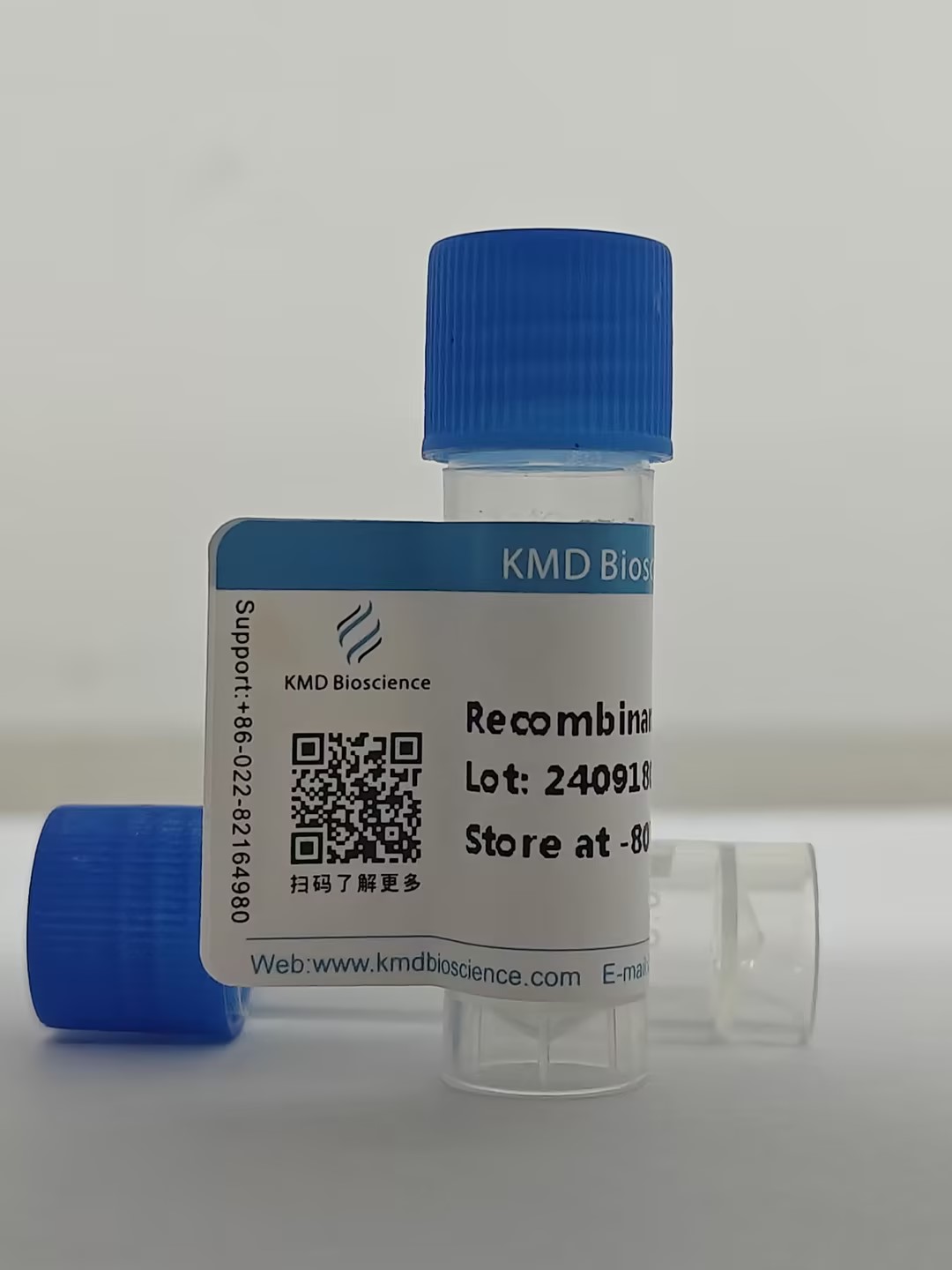
| Alias | 血管生成素 2, Human ANGPTL2 Protein, His Tag, ANGPTL2 |
| Catalog Number | KMP2824 |
| Product Description | The Human ANGPTL2 Protein(KMP2824) is produced in HEK293 Cells. The target gene encoding the human ANGPTL2 (NP_036230.1) (Asp245-His493) is expressed with a polyhistidine tag at the N-terminus. |
| Molecular Name | ANGPTL2 |
| Species | Human |
| Host | HEK293 Cells |
| Size | 50ug, 100ug, 200ug |
| Protein Family | Other protein |
| Purity | >95% as determined by SDS-PAGE |
| Concentration | 联系销售经理获得最新批次的浓度 |
| Purification | Affinity purification |
| Endotoxin | <1.0 EU/ug determined by the LAL method |
| Formulation | PBS, pH7.4 |
| Background | The angiopoietin-like protein (ANGPTL) family is homologous to angiopoietins but does not bind to the Tie2 receptor. The function of ANGPTLs has been elucidated largely in the context of angiogenesis and lipid metabolism. Morinaga et al. demonstrated that genetic depletion of Angptl2 confers amelioration of the mouse kidney fibrosis induced by a unilateral ureteral obstruction, implicating that ANGPTL2, predominantly in the renal tubular compartments, activates the transforming growth factor-β signaling and vice versa through miR-221. Angiopoietin-like protein 2 (ANGPTL2) maintains tissue homeostasis by inducing inflammation and angiogenesis. It is produced in infiltrating immune cells or resident cells, such as adipocytes, vascular endothelial cells, and tumor cells. The classic sequential cascade of P. gingivalis LPS → inflammatory cytokine induction is well established. However, in the current study, we reveal a novel cascade comprising sequential P. gingivalis LPS → ANGPTL2 → integrin α5β1 → inflammatory cytokine induction, which might be responsible for inducing potent periodontal disorganization activity in gingival epithelial cells. Via this pathway, ANGPTL2 functions in the pathogenesis of periodontitis and contributes to prolonging chronic inflammation in patients with systemic disease. That MAC-3-positive immune cells, including infiltrating bone marrow-derived macrophages and activated microglia, express abundant angiopoietin-like protein (ANGPTL) 2 in ischemic mouse brain in a transient middle cerebral artery occlusion (MCAO) model. Both neurological deficits and infarct volume decreased in transient MCAO model mice established in Angptl2 knockout (KO) relative to wild-type mice. Acute brain inflammation after ischemia-reperfusion, as estimated by expression levels of pro-inflammatory cytokines such as interleukin (IL)-1β and tumor necrosis factor alpha (TNF)-α, was significantly suppressed in Angptl2 KO compared to control mice. |
| Application | WB, ELISA |
| Recommended Dilution | ELISA: 1:100-1:1000 |
| Cross-reactivity | No cross-reactivity with other antigens or proteins. |
| Predicted Molecular Weight | 31.4 kDa |
| Predicted N Terminus | His |
| Reconstitution | Not applicable. The product is supplied as a ready-to-use liquid formulation. |
| Storage Condition | Aliquot and store at -20℃ to -80℃. Avoid repeated freezing and thawing cycles. |
| Remarks | 收到产品后请立即按保存条件储存;使用前短暂离心,使内容物集中于管底;避免反复冻融。 |
| Shipping Condition | In general, recombinant proteins are provided as lyophilized powder which are shipped at ambient temperature. If supplied as liquid, the proteins will be shipped with dry ice. |
| Stability | Samples are stable for up to twelve months from date of receipt at -20℃ to -80℃. Store it under sterile conditions at -20℃ to -80℃. It is recommended that the protein be aliquoted for optimal storage. Avoid repeated freeze-thaw cycles. |
| Molecular Weight | 31.4 kDa |
| Cross-reactivity | No cross-reactivity with other antigens or proteins. |
| Note | 仅供科研使用 |
| ELISA IC50(ppb) | ≥ 1:1000 |
| Function | The angiopoietin-like protein (ANGPTL) family is homologous to angiopoietins but does not bind to the Tie2 receptor. The function of ANGPTLs has been elucidated largely in the context of angiogenesis and lipid metabolism. Morinaga et al. demonstrated that genetic depletion of Angptl2 confers amelioration of the mouse kidney fibrosis induced by a unilateral ureteral obstruction, implicating that ANGPTL2, predominantly in the renal tubular compartments, activates the transforming growth factor-β signaling and vice versa through miR-221. Angiopoietin-like protein 2 (ANGPTL2) maintains tissue homeostasis by inducing inflammation and angiogenesis. It is produced in infiltrating immune cells or resident cells, such as adipocytes, vascular endothelial cells, and tumor cells. The classic sequential cascade of P. gingivalis LPS → inflammatory cytokine induction is well established. However, in the current study, we reveal a novel cascade comprising sequential P. gingivalis LPS → ANGPTL2 → integrin α5β1 → inflammatory cytokine induction, which might be responsible for inducing potent periodontal disorganization activity in gingival epithelial cells. Via this pathway, ANGPTL2 functions in the pathogenesis of periodontitis and contributes to prolonging chronic inflammation in patients with systemic disease. That MAC-3-positive immune cells, including infiltrating bone marrow-derived macrophages and activated microglia, express abundant angiopoietin-like protein (ANGPTL) 2 in ischemic mouse brain in a transient middle cerebral artery occlusion (MCAO) model. Both neurological deficits and infarct volume decreased in transient MCAO model mice established in Angptl2 knockout (KO) relative to wild-type mice. Acute brain inflammation after ischemia-reperfusion, as estimated by expression levels of pro-inflammatory cytokines such as interleukin (IL)-1β and tumor necrosis factor alpha (TNF)-α, was significantly suppressed in Angptl2 KO compared to control mice. |
| Product Declaration | 该产品仅供科研使用,不可直接用于人体或注射。 |
| Temperature Range | -20℃ ~ -80℃ |
| Solubility | 产品为即用型液体,无需复溶。 |
| Appearance | Liquid |
| Product Full Name | Human ANGPTL2 Protein |
| Preservative Solution | PBS, pH7.4 |
| Usage Method | 冻干粉请按“复溶”说明用无菌去离子水复溶后使用,液体产品可直接使用;具体工作浓度请参考“推荐稀释比例”。 |
| Target | ANGPTL2 |


销售微信

官方公众号


 0


