Human MCP-4 Protein, His Tag
-
产品编号
KMP2624
-
别名
单核细胞趋化蛋白 MCP-4, Human MCP-4 Protein, His Tag, MCP-4
-
目录价格
联系客服获取报价RMB
-
规格
- 50ug
- 100ug
- 200ug
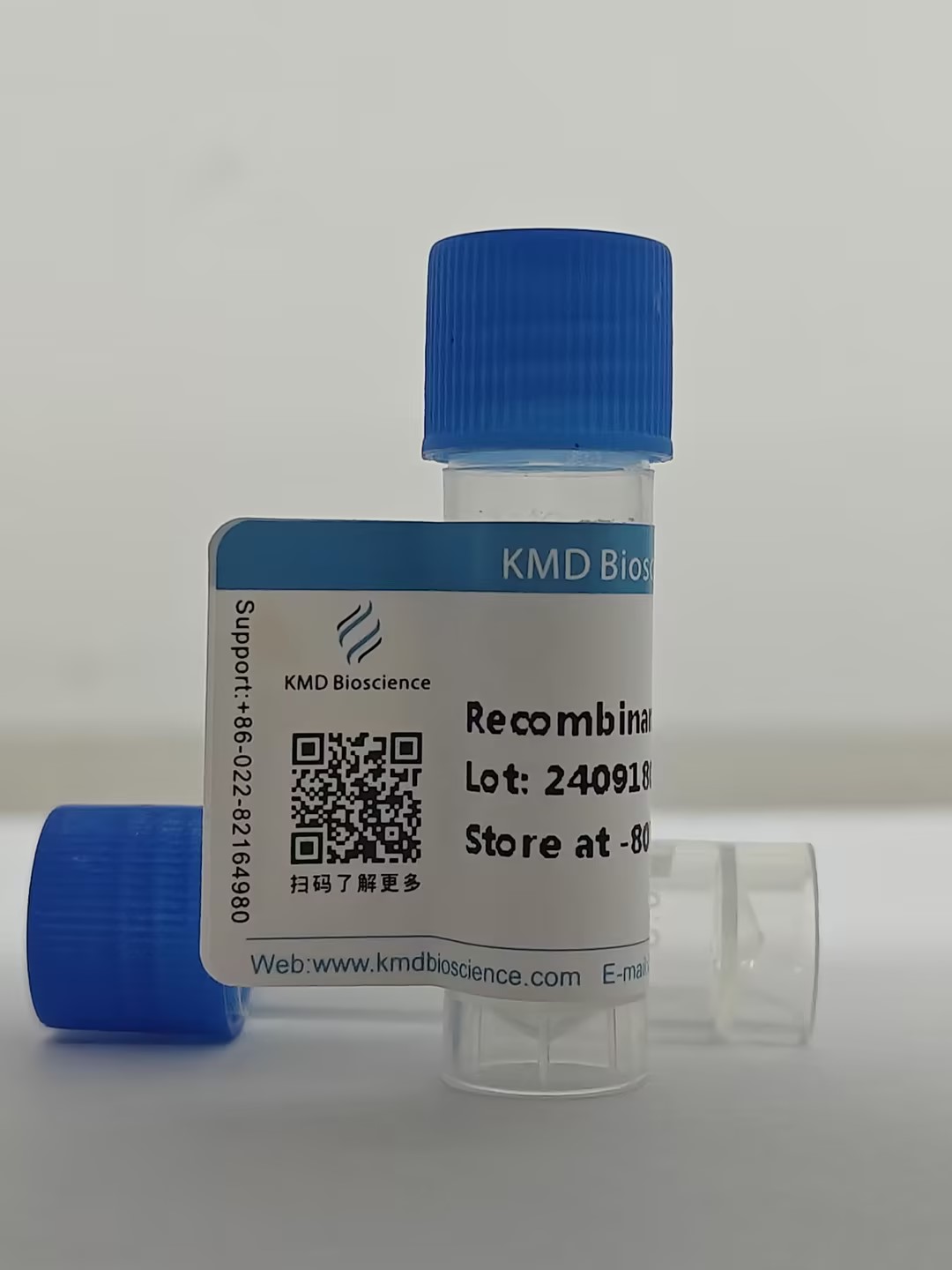
| Alias | 单核细胞趋化蛋白 MCP-4, Human MCP-4 Protein, His Tag, MCP-4 |
| Catalog Number | KMP2624 |
| Product Description | The Human MCP-4 Protein(KMP2624) is produced in Yeast. The target gene encoding human CCL13 (NP_005399.1) (Gln24-Thr98) is expressed with a polyhistidine tag at the C-terminus. |
| Molecular Name | MCP-4 |
| Species | Human |
| Host | Yeast |
| Size | 50ug, 100ug, 200ug |
| Protein Family | Other protein |
| Purity | >95% as determined by SDS-PAGE |
| Concentration | 联系销售经理获得最新批次的浓度 |
| Purification | Affinity purification |
| Endotoxin | <1.0 EU/ug determined by the LAL method |
| Formulation | PBS, pH7.4 |
| Background | Monocyte Chemoattractant Proteins 4 (MCP-4/CCL13) is a member of a distinct, structurally-related subclass of CC chemokines mainly involved in recruitment of eosinphils to inflammatory sites. CCL13/MCP-4, is a CC family chemokine that is chemoattractant for eosinophils, basophils, monocytes, macrophages, immature dendritic cells, and T cells, and its capable of inducing crucial immuno-modulatory responses through its effects on epithelial, muscular and endothelial cells. Similar to other CC chemokines, CCL13 binds to several chemokine receptors (CCR1, CCR2 and CCR3), allowing it to elicit different effects on its target cells. A number of studies have shown that CCL13 is involved in many chronic inflammatory diseases, in which it functions as a pivotal molecule involved in the selective recruitment of cell lineages to the inflamed tissues and their subsequent activation. MCP-4/CCL13 is secreted from chondrocytes and activates the proliferation of rheumatoid synovial cells, thereby leading to joint destruction in RA. The interferon-gamma in combination with interleukin-1beta/tumor necrosis factor-alpha activates the production of MCP-4/CCL13 from chondrocytes in RA joints, and that secreted MCP-4/CCL13 enhances fibroblast-like synoviocyte proliferation by activating the extracellular signal-regulated kinase mitogen-activated protein kinase cascade. CCL13 may have some role in the pathogenesis of systemic sclerosis (SSc). |
| Application | WB, ELISA |
| Recommended Dilution | ELISA: 1:100-1:1000 |
| Cross-reactivity | No cross-reactivity with other antigens or proteins. |
| Predicted Molecular Weight | 10 kDa |
| Predicted N Terminus | Gln 24 |
| Reconstitution | Not applicable. The product is supplied as a ready-to-use liquid formulation. |
| Storage Condition | Aliquot and store at -20℃ to -80℃. Avoid repeated freezing and thawing cycles. |
| Remarks | 收到产品后请立即按保存条件储存;使用前短暂离心,使内容物集中于管底;避免反复冻融。 |
| Shipping Condition | In general, recombinant proteins are provided as lyophilized powder which are shipped at ambient temperature. If supplied as liquid, the proteins will be shipped with dry ice. |
| Stability | Samples are stable for up to twelve months from date of receipt at -20℃ to -80℃. Store it under sterile conditions at -20℃ to -80℃. It is recommended that the protein be aliquoted for optimal storage. Avoid repeated freeze-thaw cycles. |
| Molecular Weight | 10 kDa |
| Cross-reactivity | No cross-reactivity with other antigens or proteins. |
| Note | 仅供科研使用 |
| ELISA IC50(ppb) | ≥ 1:1000 |
| Function | Monocyte Chemoattractant Proteins 4 (MCP-4/CCL13) is a member of a distinct, structurally-related subclass of CC chemokines mainly involved in recruitment of eosinphils to inflammatory sites. CCL13/MCP-4, is a CC family chemokine that is chemoattractant for eosinophils, basophils, monocytes, macrophages, immature dendritic cells, and T cells, and its capable of inducing crucial immuno-modulatory responses through its effects on epithelial, muscular and endothelial cells. Similar to other CC chemokines, CCL13 binds to several chemokine receptors (CCR1, CCR2 and CCR3), allowing it to elicit different effects on its target cells. A number of studies have shown that CCL13 is involved in many chronic inflammatory diseases, in which it functions as a pivotal molecule involved in the selective recruitment of cell lineages to the inflamed tissues and their subsequent activation. MCP-4/CCL13 is secreted from chondrocytes and activates the proliferation of rheumatoid synovial cells, thereby leading to joint destruction in RA. The interferon-gamma in combination with interleukin-1beta/tumor necrosis factor-alpha activates the production of MCP-4/CCL13 from chondrocytes in RA joints, and that secreted MCP-4/CCL13 enhances fibroblast-like synoviocyte proliferation by activating the extracellular signal-regulated kinase mitogen-activated protein kinase cascade. CCL13 may have some role in the pathogenesis of systemic sclerosis (SSc). |
| Product Declaration | 该产品仅供科研使用,不可直接用于人体或注射。 |
| Temperature Range | -20℃ ~ -80℃ |
| Solubility | 产品为即用型液体,无需复溶。 |
| Appearance | Liquid |
| Product Full Name | Human MCP-4 Protein |
| Preservative Solution | PBS, pH7.4 |
| Usage Method | 冻干粉请按“复溶”说明用无菌去离子水复溶后使用,液体产品可直接使用;具体工作浓度请参考“推荐稀释比例”。 |
| Target | MCP-4 |


销售微信

官方公众号


 0