

Rat PAI-1 Protein, hFc Tag
-
产品编号
KMP4230
-
别名
血浆纤溶酶原激活物抑制剂-1, PAI-1 Protein, Rat PAI-1 Protein, hFc Tag
-
目录价格
联系客服获取报价RMB
-
规格
- 50ug
- 100ug
- 200ug
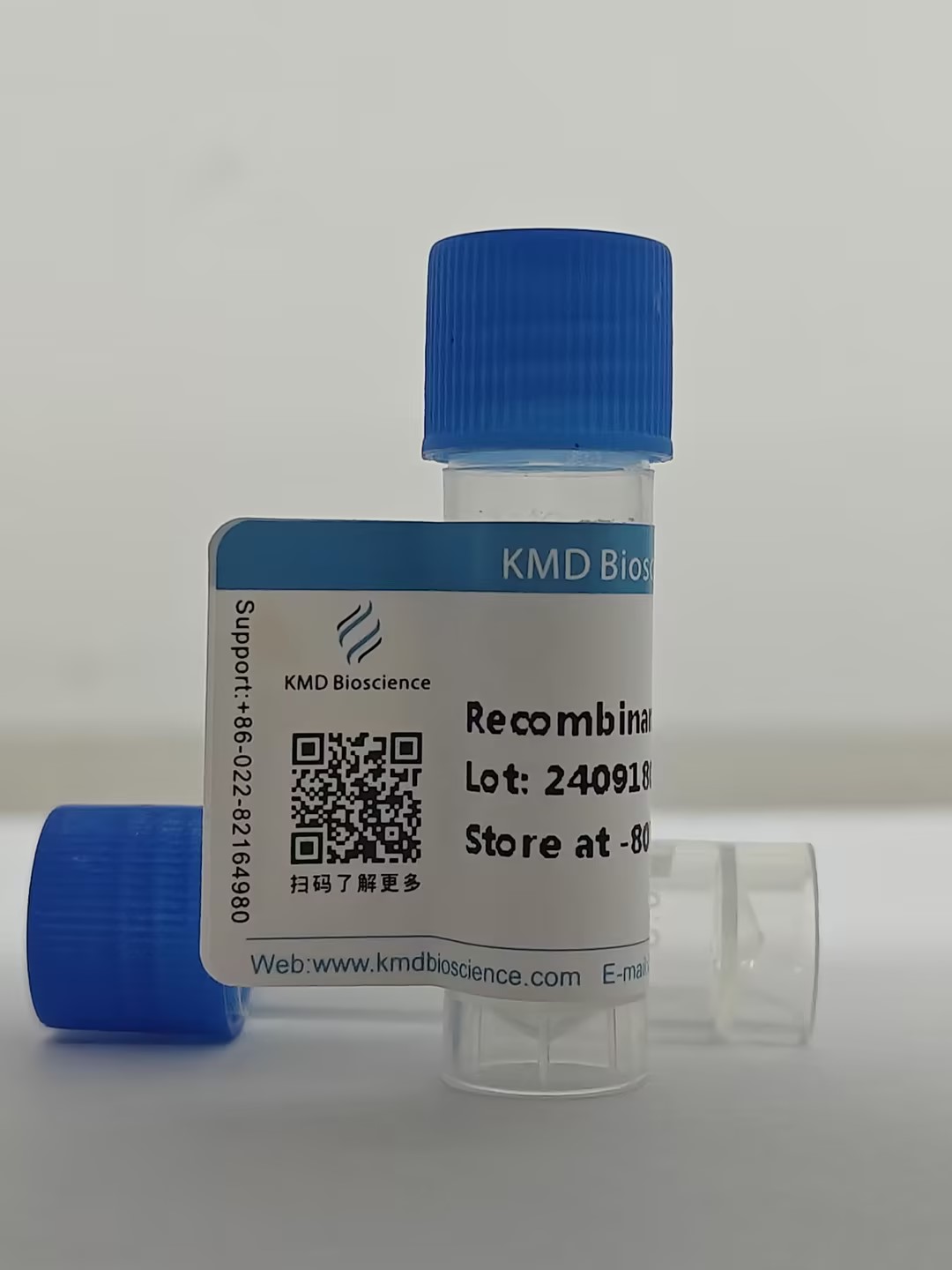
| Alias | 血浆纤溶酶原激活物抑制剂-1, PAI-1 Protein, Rat PAI-1 Protein, hFc Tag |
| Catalog Number | KMP4230 |
| Product Description | The Rat PAI-1 Protein(KMP4230) is produced in HEK293 Cells. A DNA sequence encoding the rat SERPINE1 (NP_036752.1) (Met1-Pro402) is expressed with the Fc region of human IgG1 at the C-terminus. |
| Molecular Name | PAI-1 |
| Species | Rat |
| Host | HEK293 Cells |
| Size | 50ug, 100ug, 200ug |
| Protein Family | Other protein |
| Purity | >90% as determined by SDS-PAGE |
| Concentration | 联系销售经理获得最新批次的浓度 |
| Purification | Affinity purification |
| Endotoxin | <1.0 EU/ug determined by the LAL method |
| Formulation | PBS, pH7.4 |
| Background | Plasminogen activator inhibitor 1, also known as PAI-1, Endothelial plasminogen activator inhibitor, SerpinE1 and PLANH1, is a secreted glycoprotein that belongs to the serpin family. SerpinE1 is the primary physiological inhibitor of the two plasminogen activators urokinase (uPA) and tissue plasminogen activator (tPA). Its rapid interaction with TPA may function as a major control point in the regulation of fibrinolysis. Defects in SerpinE1 are the cause of plasminogen activator inhibitor-1 deficiency (PAI-1 deficiency) which is characterized by abnormal bleeding due to SerpinE1 defect in the plasma. High concentrations of SerpinE1 have been associated with thrombophilia which is an autosomal dominant disorder in which affected individuals are prone to develop serious spontaneous thrombosis. Studies of PAI-1 have contributed significantly to the elucidation of the protease inhibitory mechanism of serpins, which is based on a metastable native state becoming stabilised by insertion of the RCL into the central beta-sheet A and formation of covalent complexes with target proteases. Greater expression of PAI-1 has been associated with increased survival of cells and resistance to apoptosis. PAI-1 appears to influence apoptosis by decreasing cell adhesion (anoikis) as well as its effect on intracellular signaling. PAI-1, in its active state, also binds to the extracellular protein vitronectin. When in complex with its target proteases, it binds with high affinity to endocytosis receptors of the low density receptor family. The mechanisms of PAI-1 overexpression during obesity are complex, and it is conceivable that several inducers are involved at the same time at several sites of synthesis. PAI-1 is also implicated in adipose tissue development. It suggests that PAI-1 inhibitors serve in the control of atherothrombosis. |
| Application | WB, ELISA |
| Recommended Dilution | ELISA: 1:100-1:1000 |
| Cross-reactivity | No cross-reactivity with other antigens or proteins. |
| Predicted Molecular Weight | 69.6 kDa |
| Predicted N Terminus | Met |
| Reconstitution | Not applicable. The product is supplied as a ready-to-use liquid formulation. |
| Storage Condition | Aliquot and store at -20℃ to -80℃. Avoid repeated freezing and thawing cycles. |
| Remarks | 收到产品后请立即按保存条件储存;使用前短暂离心,使内容物集中于管底;避免反复冻融。 |
| Shipping Condition | In general, recombinant proteins are provided as lyophilized powder which are shipped at ambient temperature. If supplied as liquid, the proteins will be shipped with dry ice. |
| Stability | Samples are stable for up to twelve months from date of receipt at -20℃ to -80℃. Store it under sterile conditions at -20℃ to -80℃. It is recommended that the protein be aliquoted for optimal storage. Avoid repeated freeze-thaw cycles. |
| Molecular Weight | 69.6 kDa |
| Cross-reactivity | No cross-reactivity with other antigens or proteins. |
| Note | 仅供科研使用 |
| ELISA IC50(ppb) | ≥ 1:1000 |
| Function | Plasminogen activator inhibitor 1, also known as PAI-1, Endothelial plasminogen activator inhibitor, SerpinE1 and PLANH1, is a secreted glycoprotein that belongs to the serpin family. SerpinE1 is the primary physiological inhibitor of the two plasminogen activators urokinase (uPA) and tissue plasminogen activator (tPA). Its rapid interaction with TPA may function as a major control point in the regulation of fibrinolysis. Defects in SerpinE1 are the cause of plasminogen activator inhibitor-1 deficiency (PAI-1 deficiency) which is characterized by abnormal bleeding due to SerpinE1 defect in the plasma. High concentrations of SerpinE1 have been associated with thrombophilia which is an autosomal dominant disorder in which affected individuals are prone to develop serious spontaneous thrombosis. Studies of PAI-1 have contributed significantly to the elucidation of the protease inhibitory mechanism of serpins, which is based on a metastable native state becoming stabilised by insertion of the RCL into the central beta-sheet A and formation of covalent complexes with target proteases. Greater expression of PAI-1 has been associated with increased survival of cells and resistance to apoptosis. PAI-1 appears to influence apoptosis by decreasing cell adhesion (anoikis) as well as its effect on intracellular signaling. PAI-1, in its active state, also binds to the extracellular protein vitronectin. When in complex with its target proteases, it binds with high affinity to endocytosis receptors of the low density receptor family. The mechanisms of PAI-1 overexpression during obesity are complex, and it is conceivable that several inducers are involved at the same time at several sites of synthesis. PAI-1 is also implicated in adipose tissue development. It suggests that PAI-1 inhibitors serve in the control of atherothrombosis. |
| Product Declaration | 该产品仅供科研使用,不可直接用于人体或注射。 |
| Temperature Range | -20℃ ~ -80℃ |
| Solubility | 产品为即用型液体,无需复溶。 |
| Appearance | Liquid |
| Product Full Name | Rat PAI-1 Protein |
| Preservative Solution | PBS, pH7.4 |
| Usage Method | 冻干粉请按“复溶”说明用无菌去离子水复溶后使用,液体产品可直接使用;具体工作浓度请参考“推荐稀释比例”。 |
| Target | PAI-1 |


销售微信

官方公众号


 0

