Human C1s Protein, His Tag
-
产品编号
KMP2525
-
别名
补充C1s, Human C1s Protein, His Tag, C1s
-
目录价格
联系客服获取报价RMB
-
规格
- 50ug
- 100ug
- 200ug
| Alias | 补充C1s, Human C1s Protein, His Tag, C1s |
| Catalog Number | KMP2525 |
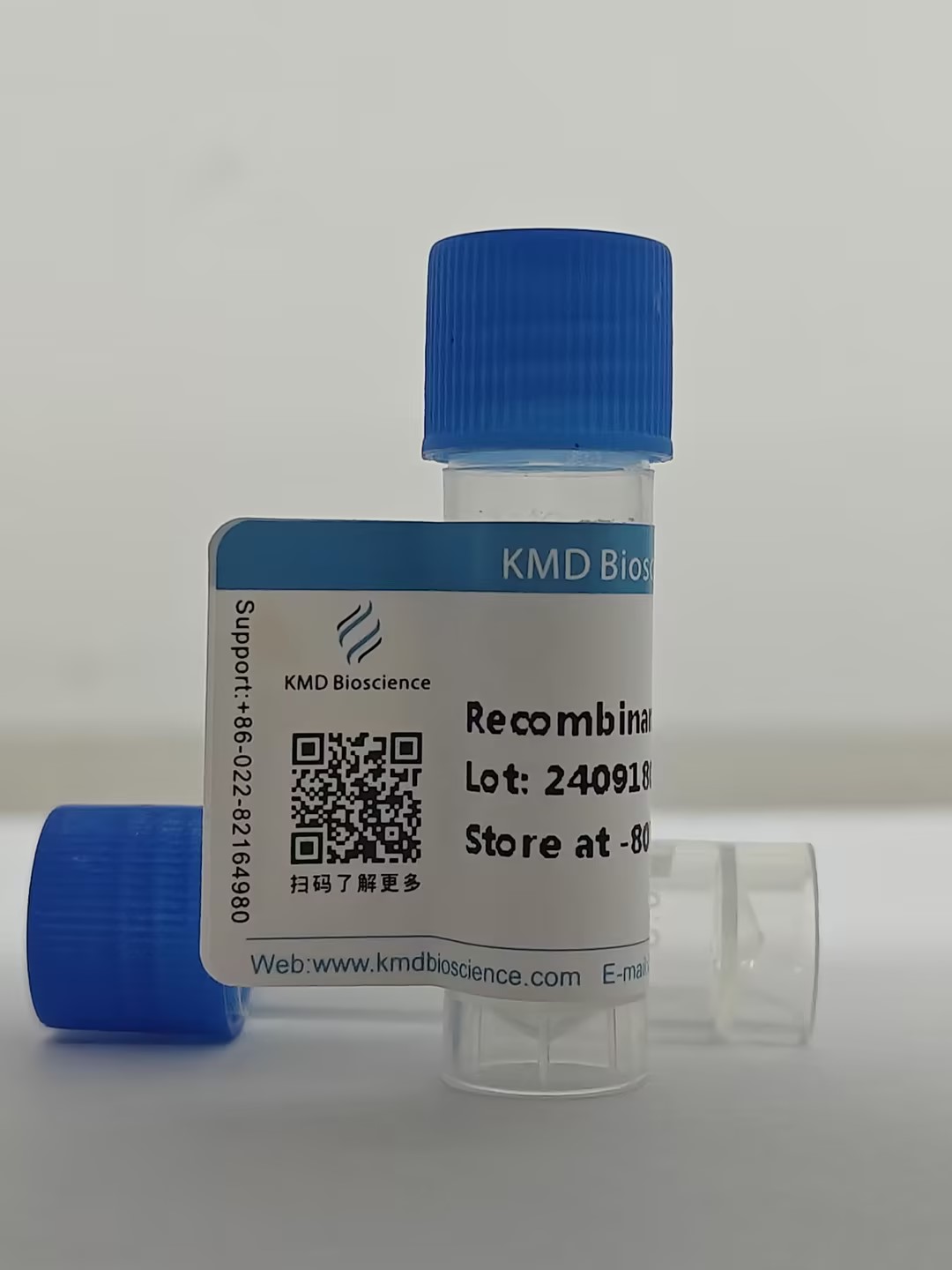
| Product Description | The Human C1s Protein(KMP2525) is produced in HEK293 Cells. The target gene encoding the recombinant human complement componentC1s (NP_001725.1) (Met 1-Asp 688) is expressed with a C-terminal polyhistidine tag. |
| Molecular Name | C1s |
| Species | Human |
| Host | HEK293 Cells |
| Size | 50ug, 100ug, 200ug |
| Protein Family | Other protein |
| Purity | >90% as determined by SDS-PAGE |
| Concentration | 联系销售经理获得最新批次的浓度 |
| Purification | Affinity purification |
| Endotoxin | <1.0 EU/ug determined by the LAL method |
| Formulation | PBS, pH7.4 |
| Background | Complement is an integral component of the adaptive and innate immune systems and represents one of the major effector systems for the immune responses. The classical complement pathway is triggered by C1, a complex composed of the binding protein C1q and two proenzymes, C1r and C1s. Upon binding of IgG to the head of C1q, C1r undergoes autoactivation and in turn cleaves and activates C1s. C1r and C1s, the proteases responsible for activation and proteolytic activity of the C1 complex of complement, share similar overall structural organizations featuring five nonenzymic protein modules (two CUB modules surrounding a single EGF module, and a pair of CCP modules) followed by a serine protease domain. Besides highly specific proteolytic activities, both proteases exhibit interaction properties associated with their N-terminal regions. In contrast, C1r and C1s widely differ from each other by their glycosylation patterns: both proteins contain Asn-linked carbohydrates, but four glycosylation sites are present on C1r, and only two on C1s. As a highly specific serine protease, C1s executes the catalytic function of the C1 complex: the cleavage of C4 and C2, and thus instigates a sequence of activation steps of other components of the complement system, culminating in the formation of the membrane attack complex which induces cell lysis. Like other complement serine proteases C1s has restricted substrate specificity and it is engaged into specific interactions with other subcomponents of the complement system. The only other protein known to interact with C1s physiologically is SerpinC1, an inhibitor of serine protease, which inhibits C1s activity and thus plays a regulatory role in controlling the function of C1s enzyme. |
| Application | WB, ELISA |
| Recommended Dilution | ELISA: 1:100-1:1000 |
| Cross-reactivity | No cross-reactivity with other antigens or proteins. |
| Predicted Molecular Weight | 76.3 kDa |
| Predicted N Terminus | Met |
| Reconstitution | Not applicable. The product is supplied as a ready-to-use liquid formulation. |
| Storage Condition | Aliquot and store at -20℃ to -80℃. Avoid repeated freezing and thawing cycles. |
| Remarks | 收到产品后请立即按保存条件储存;使用前短暂离心,使内容物集中于管底;避免反复冻融。 |
| Shipping Condition | In general, recombinant proteins are provided as lyophilized powder which are shipped at ambient temperature. If supplied as liquid, the proteins will be shipped with dry ice. |
| Stability | Samples are stable for up to twelve months from date of receipt at -20℃ to -80℃. Store it under sterile conditions at -20℃ to -80℃. It is recommended that the protein be aliquoted for optimal storage. Avoid repeated freeze-thaw cycles. |
| Molecular Weight | 76.3 kDa |
| Cross-reactivity | No cross-reactivity with other antigens or proteins. |
| Note | 仅供科研使用 |
| ELISA IC50(ppb) | ≥ 1:1000 |
| Function | Complement is an integral component of the adaptive and innate immune systems and represents one of the major effector systems for the immune responses. The classical complement pathway is triggered by C1, a complex composed of the binding protein C1q and two proenzymes, C1r and C1s. Upon binding of IgG to the head of C1q, C1r undergoes autoactivation and in turn cleaves and activates C1s. C1r and C1s, the proteases responsible for activation and proteolytic activity of the C1 complex of complement, share similar overall structural organizations featuring five nonenzymic protein modules (two CUB modules surrounding a single EGF module, and a pair of CCP modules) followed by a serine protease domain. Besides highly specific proteolytic activities, both proteases exhibit interaction properties associated with their N-terminal regions. In contrast, C1r and C1s widely differ from each other by their glycosylation patterns: both proteins contain Asn-linked carbohydrates, but four glycosylation sites are present on C1r, and only two on C1s. As a highly specific serine protease, C1s executes the catalytic function of the C1 complex: the cleavage of C4 and C2, and thus instigates a sequence of activation steps of other components of the complement system, culminating in the formation of the membrane attack complex which induces cell lysis. Like other complement serine proteases C1s has restricted substrate specificity and it is engaged into specific interactions with other subcomponents of the complement system. The only other protein known to interact with C1s physiologically is SerpinC1, an inhibitor of serine protease, which inhibits C1s activity and thus plays a regulatory role in controlling the function of C1s enzyme. |
| Product Declaration | 该产品仅供科研使用,不可直接用于人体或注射。 |
| Temperature Range | -20℃ ~ -80℃ |
| Solubility | 产品为即用型液体,无需复溶。 |
| Appearance | Liquid |
| Product Full Name | Human C1s Protein |
| Preservative Solution | PBS, pH7.4 |
| Usage Method | 冻干粉请按“复溶”说明用无菌去离子水复溶后使用,液体产品可直接使用;具体工作浓度请参考“推荐稀释比例”。 |
| Target | C1s |


销售微信

官方公众号


 0