Human AMH Protein, His Tag
-
产品编号
KMP3421
-
别名
抗缪勒氏管激素, Human AMH Protein, His Tag, AMH
-
目录价格
联系客服获取报价RMB
-
规格
- 50ug
- 100ug
- 200ug
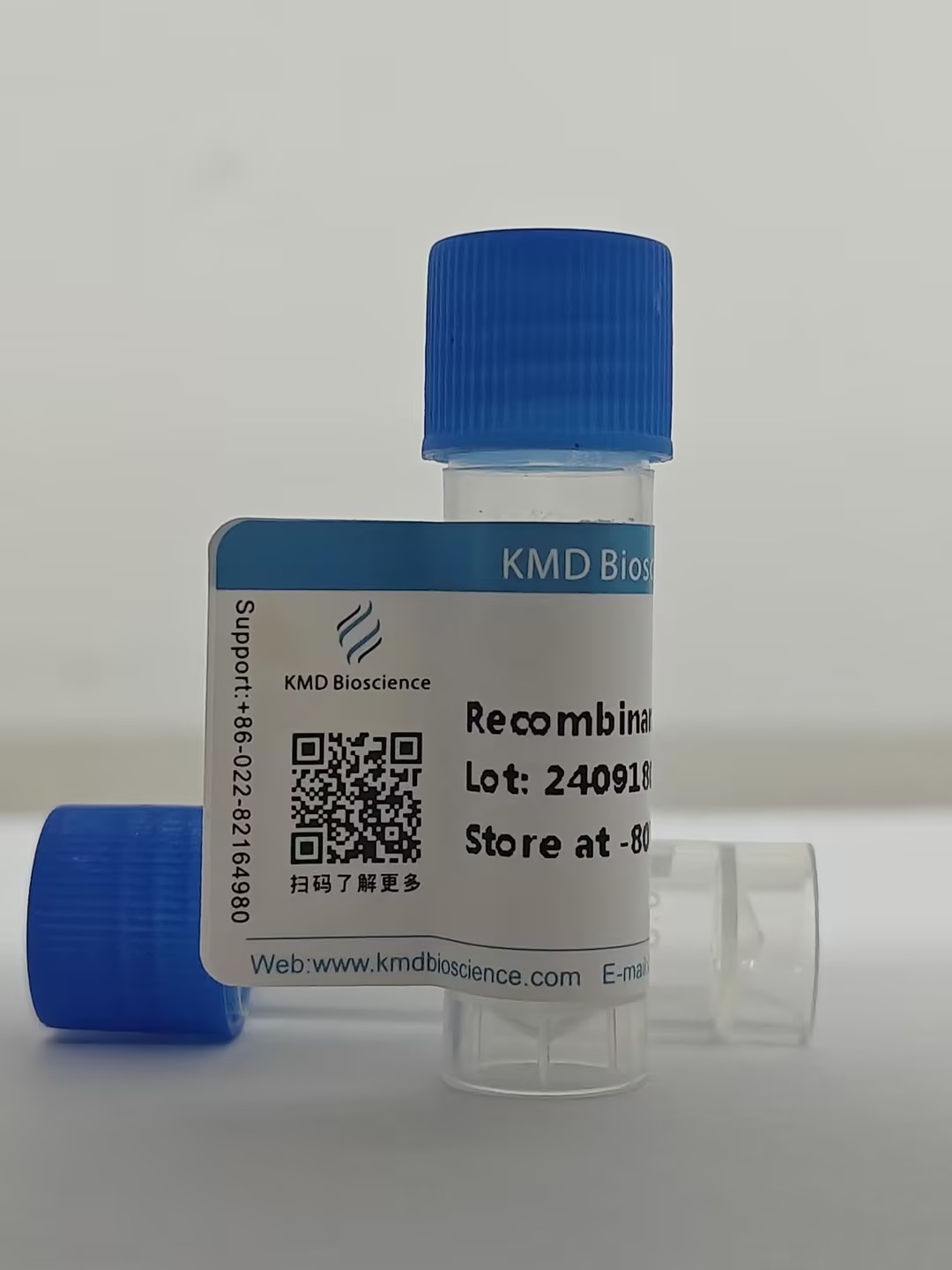
| Alias | 抗缪勒氏管激素, Human AMH Protein, His Tag, AMH |
| Catalog Number | KMP3421 |
| Product Description | The Human AMH Protein(KMP3421) is produced in HEK293 Cells. The target gene encoding the human AMH (NP_000470.2) (Leu25-Arg560) is expressed with a polyhistidine tag at the N-terminus. |
| Molecular Name | AMH |
| Species | Human |
| Host | HEK293 Cells |
| Size | 50ug, 100ug, 200ug |
| Protein Family | Other protein |
| Purity | >90% as determined by SDS-PAGE |
| Concentration | 联系销售经理获得最新批次的浓度 |
| Purification | Affinity purification |
| Endotoxin | <1.0 EU/ug determined by the LAL method |
| Formulation | 20mM Tris, 150mM NaCl, pH8.0 |
| Background | Anti-Mullerian hormone (AMH), a member of the TGF-beta superfamily, is produced by granulosa cells (GCs) of preantral and small antral follicles and plays a role in regulating the recruitment of primordial follicles and the FSH-dependent development of follicles. BMP15 up-regulates the transcription of AMH and that the inhibition of p38 MAPK decreases the BMP15-induced expression of AMH and SOX9, suggesting that BMP15 up-regulates the expression of AMH via the p38 MAPK signaling pathway, and this process involves the SOX9 transcription factor. AMH is widely used for assessing ovarian reserve, and it is particularly convenient, because it is thought to have minimal variability throughout the menstrual cycle. Fetal anti-Mullerian hormone (AMH) is responsible for normal male sexual differentiation, and circulating AMH is used as a marker of testicular tissue in newborns with disorders of sex development. Anti-Mullerian hormone (AMH) produced in the developing testis induces the regression of the Mullerian duct, which develops into the oviducts, uterus and upper vagina. As well as other hormone receptors, and a decreased ovarian cortex cell proliferation. These results help understand the inhibitory effects of AMH on follicular development. |
| Application | WB, ELISA |
| Recommended Dilution | ELISA: 1:100-1:1000 |
| Cross-reactivity | No cross-reactivity with other antigens or proteins. |
| Predicted Molecular Weight | 59.1 kDa |
| Predicted N Terminus | His |
| Reconstitution | Not applicable. The product is supplied as a ready-to-use liquid formulation. |
| Storage Condition | Aliquot and store at -20℃ to -80℃. Avoid repeated freezing and thawing cycles. |
| Remarks | 收到产品后请立即按保存条件储存;使用前短暂离心,使内容物集中于管底;避免反复冻融。 |
| Shipping Condition | In general, recombinant proteins are provided as lyophilized powder which are shipped at ambient temperature. If supplied as liquid, the proteins will be shipped with dry ice. |
| Stability | Samples are stable for up to twelve months from date of receipt at -20℃ to -80℃. Store it under sterile conditions at -20℃ to -80℃. It is recommended that the protein be aliquoted for optimal storage. Avoid repeated freeze-thaw cycles. |
| Molecular Weight | 59.1 kDa |
| Cross-reactivity | No cross-reactivity with other antigens or proteins. |
| Note | 仅供科研使用 |
| ELISA IC50(ppb) | ≥ 1:1000 |
| Function | Anti-Mullerian hormone (AMH), a member of the TGF-beta superfamily, is produced by granulosa cells (GCs) of preantral and small antral follicles and plays a role in regulating the recruitment of primordial follicles and the FSH-dependent development of follicles. BMP15 up-regulates the transcription of AMH and that the inhibition of p38 MAPK decreases the BMP15-induced expression of AMH and SOX9, suggesting that BMP15 up-regulates the expression of AMH via the p38 MAPK signaling pathway, and this process involves the SOX9 transcription factor. AMH is widely used for assessing ovarian reserve, and it is particularly convenient, because it is thought to have minimal variability throughout the menstrual cycle. Fetal anti-Mullerian hormone (AMH) is responsible for normal male sexual differentiation, and circulating AMH is used as a marker of testicular tissue in newborns with disorders of sex development. Anti-Mullerian hormone (AMH) produced in the developing testis induces the regression of the Mullerian duct, which develops into the oviducts, uterus and upper vagina. As well as other hormone receptors, and a decreased ovarian cortex cell proliferation. These results help understand the inhibitory effects of AMH on follicular development. |
| Product Declaration | 该产品仅供科研使用,不可直接用于人体或注射。 |
| Temperature Range | -20℃ ~ -80℃ |
| Solubility | 产品为即用型液体,无需复溶。 |
| Appearance | Liquid |
| Product Full Name | Human AMH Protein |
| Preservative Solution | 20mM Tris, 150mM NaCl, pH8.0 |
| Usage Method | 冻干粉请按“复溶”说明用无菌去离子水复溶后使用,液体产品可直接使用;具体工作浓度请参考“推荐稀释比例”。 |
| Target | AMH |


销售微信

官方公众号


 0
0