Human Cystatin C Protein
-
产品编号
KMP2605
-
别名
胱抑素C, Human Cystatin C Protein, Cystatin C
-
目录价格
联系客服获取报价RMB
-
规格
- 50ug
- 100ug
- 200ug
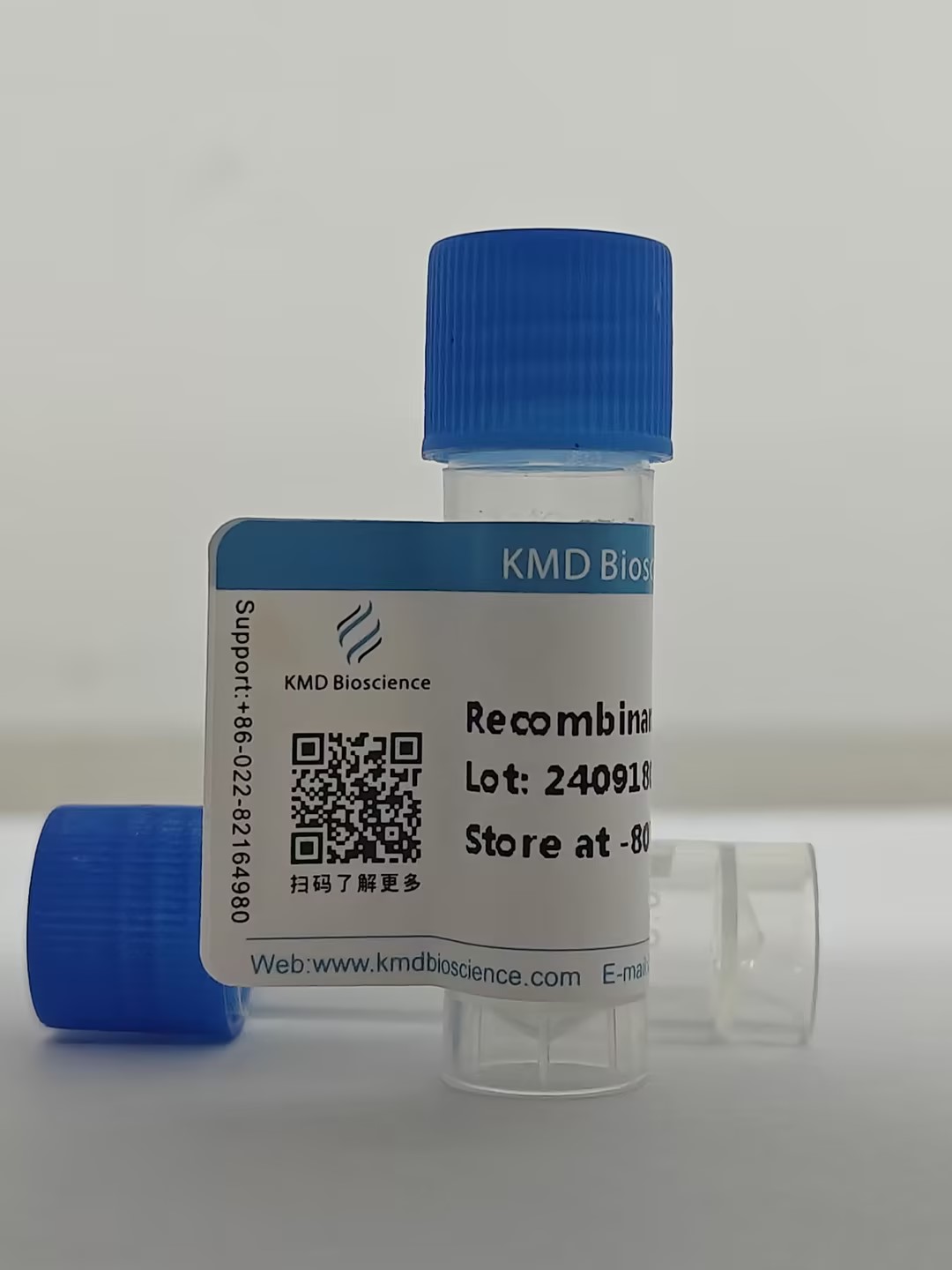
| Alias | 胱抑素C, Human Cystatin C Protein, Cystatin C |
| Catalog Number | KMP2605 |
| Product Description | The Human Cystatin C Protein(KMP2605) is produced in HEK293 Cells. The target gene encoding the human CST3 (AAA52164.1) (Met1-Ala146) is expressed. |
| Molecular Name | Cystatin C |
| Species | Human |
| Host | HEK293 Cells |
| Size | 50ug, 100ug, 200ug |
| Protein Family | Other protein |
| Purity | >90% as determined by SDS-PAGE |
| Concentration | 联系销售经理获得最新批次的浓度 |
| Purification | Affinity purification |
| Endotoxin | <1.0 EU/ug determined by the LAL method |
| Formulation | PBS, pH7.4 |
| Background | Cystatin C, also known as Cystatin-3 (CST3) is a secreted type 2 cysteine protease inhibitor synthesized in all nucleated cells, has been proposed as a replacement for serum creatinine for the assessment of renal function, particularly to detect small reductions in glomerular filtration rate. The mature, active form of human cystatin C is a single non-glycosylated polypeptide chain consisting of 120 amino acid residues, with a molecular mass of 13,343-13,359 Da, and containing four characteristic disulfide-paired cysteine residues. Cystatin C is a low-molecular-weight protein that has been proposed as a marker of renal function that could replace creatinine. Indeed, the concentration of Cystatin C is mainly determined by glomerular filtration and is particularly of interest in clinical settings where the relationship between creatinine production and muscle mass impairs the clinical performance of creatinine. Since the last decade, numerous studies have evaluated its potential use in measuring renal function in various populations. More recently, other potential developments for its clinical use have emerged. In almost all the clinical studies, Cystatin C demonstrated a better diagnostic accuracy than serum creatinine in discriminating normal from impaired kidney function, but controversial results have been obtained by comparing this protein with other indices of kidney disease, especially serum creatinine-based equations, such as early atherosclerosis, Alzheimer's dementia, vascular aneurysms, hyperhomocysteinaemia and other neurodegenerative diseases. Cystatin C could be a useful clinical tool to identify HIV-infected persons. In addition, its expression is up-regulated in malignance of certain tumor progression. |
| Application | WB, ELISA |
| Recommended Dilution | ELISA: 1:100-1:1000 |
| Cross-reactivity | No cross-reactivity with other antigens or proteins. |
| Predicted Molecular Weight | 13.3 kDa |
| Predicted N Terminus | Met |
| Reconstitution | Not applicable. The product is supplied as a ready-to-use liquid formulation. |
| Storage Condition | Aliquot and store at -20℃ to -80℃. Avoid repeated freezing and thawing cycles. |
| Remarks | 收到产品后请立即按保存条件储存;使用前短暂离心,使内容物集中于管底;避免反复冻融。 |
| Shipping Condition | In general, recombinant proteins are provided as lyophilized powder which are shipped at ambient temperature. If supplied as liquid, the proteins will be shipped with dry ice. |
| Stability | Samples are stable for up to twelve months from date of receipt at -20℃ to -80℃. Store it under sterile conditions at -20℃ to -80℃. It is recommended that the protein be aliquoted for optimal storage. Avoid repeated freeze-thaw cycles. |
| Molecular Weight | 13.3 kDa |
| Cross-reactivity | No cross-reactivity with other antigens or proteins. |
| Note | 仅供科研使用 |
| ELISA IC50(ppb) | ≥ 1:1000 |
| Function | Cystatin C, also known as Cystatin-3 (CST3) is a secreted type 2 cysteine protease inhibitor synthesized in all nucleated cells, has been proposed as a replacement for serum creatinine for the assessment of renal function, particularly to detect small reductions in glomerular filtration rate. The mature, active form of human cystatin C is a single non-glycosylated polypeptide chain consisting of 120 amino acid residues, with a molecular mass of 13,343-13,359 Da, and containing four characteristic disulfide-paired cysteine residues. Cystatin C is a low-molecular-weight protein that has been proposed as a marker of renal function that could replace creatinine. Indeed, the concentration of Cystatin C is mainly determined by glomerular filtration and is particularly of interest in clinical settings where the relationship between creatinine production and muscle mass impairs the clinical performance of creatinine. Since the last decade, numerous studies have evaluated its potential use in measuring renal function in various populations. More recently, other potential developments for its clinical use have emerged. In almost all the clinical studies, Cystatin C demonstrated a better diagnostic accuracy than serum creatinine in discriminating normal from impaired kidney function, but controversial results have been obtained by comparing this protein with other indices of kidney disease, especially serum creatinine-based equations, such as early atherosclerosis, Alzheimer's dementia, vascular aneurysms, hyperhomocysteinaemia and other neurodegenerative diseases. Cystatin C could be a useful clinical tool to identify HIV-infected persons. In addition, its expression is up-regulated in malignance of certain tumor progression. |
| Product Declaration | 该产品仅供科研使用,不可直接用于人体或注射。 |
| Temperature Range | -20℃ ~ -80℃ |
| Solubility | 产品为即用型液体,无需复溶。 |
| Appearance | Liquid |
| Product Full Name | Human Cystatin C Protein |
| Preservative Solution | PBS, pH7.4 |
| Usage Method | 冻干粉请按“复溶”说明用无菌去离子水复溶后使用,液体产品可直接使用;具体工作浓度请参考“推荐稀释比例”。 |
| Target | Cystatin C |


销售微信

官方公众号


 0