

Rat CXCL2 Protein
-
产品编号
KMP4187
-
别名
巨噬细胞炎症蛋白2, CXCL2 Protein, Rat CXCL2 Protein
-
目录价格
联系客服获取报价RMB
-
规格
- 50ug
- 100ug
- 200ug
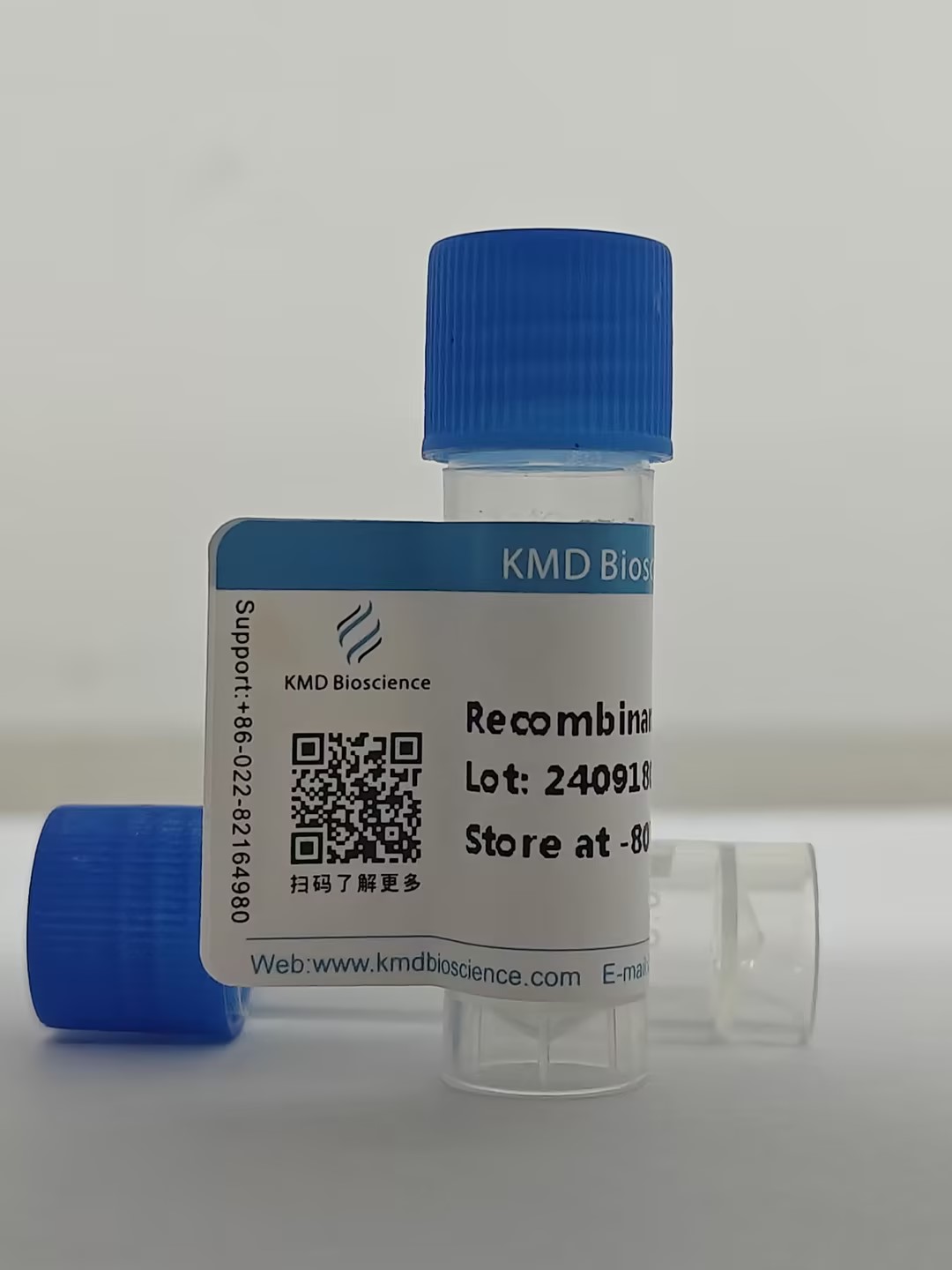
| Alias | 巨噬细胞炎症蛋白2, CXCL2 Protein, Rat CXCL2 Protein |
| Catalog Number | KMP4187 |
| Product Description | The Rat CXCL2 Protein(KMP4187) is produced in E. coli. A DNA sequence encoding the rat Cxcl2 (NP_446099.1) (Ser32-Asn100) is expressed with two additional amino acids (Gly & Pro ) at the N-terminus. |
| Molecular Name | CXCL2 |
| Species | Rat |
| Host | E. coli |
| Size | 50ug, 100ug, 200ug |
| Protein Family | Other protein |
| Purity | >85% as determined by SDS-PAGE |
| Concentration | 联系销售经理获得最新批次的浓度 |
| Purification | Affinity purification |
| Endotoxin | <1.0 EU/ug determined by the LAL method |
| Formulation | 20mM Tris, 500mM NaCl, pH8.0 |
| Background | Chemokine (C-X-C motif) ligand 2 (CXCL2), also called macrophage inflammatory protein 2 (MIP-2), Growth-regulated protein beta (Gro-beta) and Gro oncogene-2 (Gro-2), is a small cytokine belonging to the CXC chemokine family. CXCL2/MIP-2 is selectively up-regulated in tolerance-conferring APCs and serves to recruit NKT cells to the splenic marginal zone, where they form clusters with APCs and T cells. In the absence of the high-affinity receptor for CXCL2/MIP-2 or in the presence of a blocking Ab to CXCL2/MIP-2, peripheral tolerance is prevented, and Ag-specific T regulatory cells are not generated. CXCL2/MIP-2 is selectively up-regulated in tolerance-conferring APCs and serves to recruit NKT cells to the splenic marginal zone, where they form clusters with APCs and T cells. In the absence of the high-affinity receptor for MIP-2 (as in CXCR2-deficient mice) or in the presence of a blocking Ab to MIP-2, peripheral tolerance is prevented, and Ag-specific T regulatory cells are not generated. Understanding the regulation of lymphocyte traffic during tolerance induction may lead to novel therapies for autoimmunity, graft acceptance, and tumor rejection. Several studies have implicated the CXCL2 chemokine as a mediator in the development of sepsis. CXCL2/MIP-2 also plays a major role in mediating the neutrophilic inflammatory response of the rodent lung to particles such as quartz, crocidolite asbestos, as well as high doses of other relative innocuous dusts such as titanium dioxide. |
| Application | WB, ELISA |
| Recommended Dilution | ELISA: 1:100-1:1000 |
| Cross-reactivity | No cross-reactivity with other antigens or proteins. |
| Predicted Molecular Weight | 7.6 kDa |
| Predicted N Terminus | Ser 32 |
| Reconstitution | Not applicable. The product is supplied as a ready-to-use liquid formulation. |
| Storage Condition | Aliquot and store at -20℃ to -80℃. Avoid repeated freezing and thawing cycles. |
| Remarks | 收到产品后请立即按保存条件储存;使用前短暂离心,使内容物集中于管底;避免反复冻融。 |
| Shipping Condition | In general, recombinant proteins are provided as lyophilized powder which are shipped at ambient temperature. If supplied as liquid, the proteins will be shipped with dry ice. |
| Stability | Samples are stable for up to twelve months from date of receipt at -20℃ to -80℃. Store it under sterile conditions at -20℃ to -80℃. It is recommended that the protein be aliquoted for optimal storage. Avoid repeated freeze-thaw cycles. |
| Molecular Weight | 7.6 kDa |
| Cross-reactivity | No cross-reactivity with other antigens or proteins. |
| Note | 仅供科研使用 |
| ELISA IC50(ppb) | ≥ 1:1000 |
| Function | Chemokine (C-X-C motif) ligand 2 (CXCL2), also called macrophage inflammatory protein 2 (MIP-2), Growth-regulated protein beta (Gro-beta) and Gro oncogene-2 (Gro-2), is a small cytokine belonging to the CXC chemokine family. CXCL2/MIP-2 is selectively up-regulated in tolerance-conferring APCs and serves to recruit NKT cells to the splenic marginal zone, where they form clusters with APCs and T cells. In the absence of the high-affinity receptor for CXCL2/MIP-2 or in the presence of a blocking Ab to CXCL2/MIP-2, peripheral tolerance is prevented, and Ag-specific T regulatory cells are not generated. CXCL2/MIP-2 is selectively up-regulated in tolerance-conferring APCs and serves to recruit NKT cells to the splenic marginal zone, where they form clusters with APCs and T cells. In the absence of the high-affinity receptor for MIP-2 (as in CXCR2-deficient mice) or in the presence of a blocking Ab to MIP-2, peripheral tolerance is prevented, and Ag-specific T regulatory cells are not generated. Understanding the regulation of lymphocyte traffic during tolerance induction may lead to novel therapies for autoimmunity, graft acceptance, and tumor rejection. Several studies have implicated the CXCL2 chemokine as a mediator in the development of sepsis. CXCL2/MIP-2 also plays a major role in mediating the neutrophilic inflammatory response of the rodent lung to particles such as quartz, crocidolite asbestos, as well as high doses of other relative innocuous dusts such as titanium dioxide. |
| Product Declaration | 该产品仅供科研使用,不可直接用于人体或注射。 |
| Temperature Range | -20℃ ~ -80℃ |
| Solubility | 产品为即用型液体,无需复溶。 |
| Appearance | Liquid |
| Product Full Name | Rat CXCL2 Protein |
| Preservative Solution | 20mM Tris, 500mM NaCl, pH8.0 |
| Usage Method | 冻干粉请按“复溶”说明用无菌去离子水复溶后使用,液体产品可直接使用;具体工作浓度请参考“推荐稀释比例”。 |
| Target | CXCL2 |


销售微信

官方公众号


 0

