

Mouse CD162 Protein
-
产品编号
KMP3966
-
别名
P选择素糖蛋白配体1, CD162 Protein, Mouse CD162 Protein
-
目录价格
联系客服获取报价RMB
-
规格
- 50ug
- 100ug
- 200ug
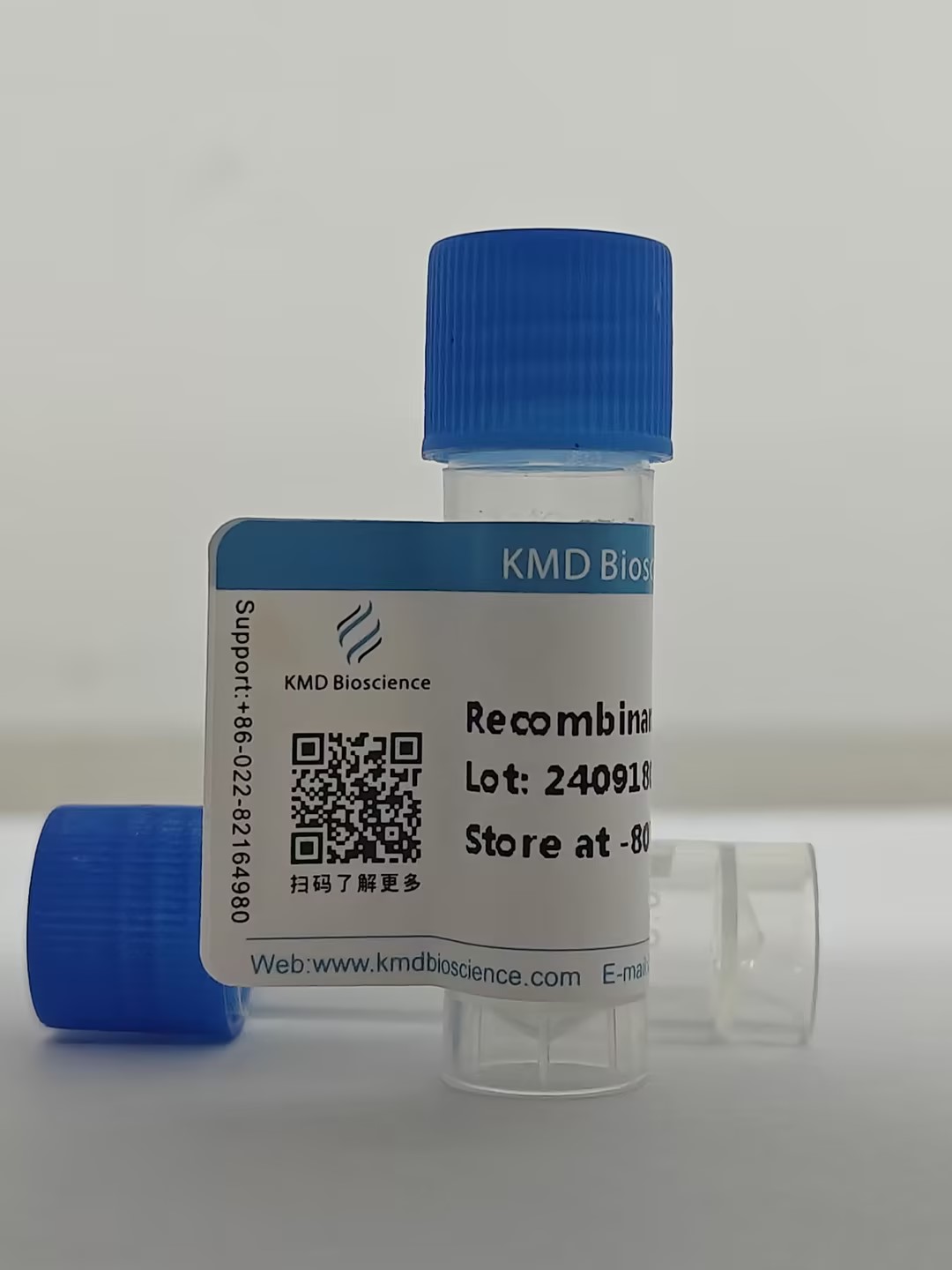
| Alias | P选择素糖蛋白配体1, CD162 Protein, Mouse CD162 Protein |
| Catalog Number | KMP3966 |
| Product Description | The Mouse CD162 Protein(KMP3966) is produced in HEK293 Cells. A DNA sequence encoding the extracellular domain of Mouse SELPLG (Q62170) (Met1-Cys307) is expressed with six amino acids (LEVLFQ) at the C- terminus. |
| Molecular Name | CD162 |
| Species | Mouse |
| Host | HEK293 Cells |
| Size | 50ug, 100ug, 200ug |
| Protein Family | CD molecule |
| Purity | >85% as determined by SDS-PAGE |
| Concentration | 联系销售经理获得最新批次的浓度 |
| Purification | Affinity purification |
| Endotoxin | <1.0 EU/ug determined by the LAL method |
| Formulation | PBS, pH7.4 |
| Background | P-selectin glycoprotein ligand-1 (PSGL-1), also known as SELPLG or CD162, is the high affinity ounter-receptor for P-selectin on expressed on activated endothelial cells and platelets. PSGL-1 is a mucin-type glycoprotein, expressed on leukocytes and platelets as a homodimer of two disulfide-linked subunits of ~12 kD. As cell adhesion molecules, multiple studies have shown that PSGL-1/P-selectin interaction is required for the normal recruitment of leukocytes during inflammatory reactions, and also participates in hemostatic responses. PSGL-1 protein requires two distinct posttranslational modifications for the Ca2+-dependent recognition by the lectin domain of P-selectin, that is tyrosine sulfation and specific O-linked glycosylation (sialic acid and fucose). PSGL-1 can also bind to other two members of the selectin family, E-selectin (endothelial) and L-selectin (leukocyte), but binds best to P-selectin. |
| Application | WB, ELISA |
| Recommended Dilution | ELISA: 1:100-1:1000 |
| Cross-reactivity | No cross-reactivity with other antigens or proteins. |
| Predicted Molecular Weight | 31.2 kDa |
| Predicted N Terminus | Met |
| Reconstitution | Not applicable. The product is supplied as a ready-to-use liquid formulation. |
| Storage Condition | Aliquot and store at -20℃ to -80℃. Avoid repeated freezing and thawing cycles. |
| Remarks | 收到产品后请立即按保存条件储存;使用前短暂离心,使内容物集中于管底;避免反复冻融。 |
| Shipping Condition | In general, recombinant proteins are provided as lyophilized powder which are shipped at ambient temperature. If supplied as liquid, the proteins will be shipped with dry ice. |
| Stability | Samples are stable for up to twelve months from date of receipt at -20℃ to -80℃. Store it under sterile conditions at -20℃ to -80℃. It is recommended that the protein be aliquoted for optimal storage. Avoid repeated freeze-thaw cycles. |
| Molecular Weight | 31.2 kDa |
| Cross-reactivity | No cross-reactivity with other antigens or proteins. |
| Note | 仅供科研使用 |
| ELISA IC50(ppb) | ≥ 1:1000 |
| Function | P-selectin glycoprotein ligand-1 (PSGL-1), also known as SELPLG or CD162, is the high affinity ounter-receptor for P-selectin on expressed on activated endothelial cells and platelets. PSGL-1 is a mucin-type glycoprotein, expressed on leukocytes and platelets as a homodimer of two disulfide-linked subunits of ~12 kD. As cell adhesion molecules, multiple studies have shown that PSGL-1/P-selectin interaction is required for the normal recruitment of leukocytes during inflammatory reactions, and also participates in hemostatic responses. PSGL-1 protein requires two distinct posttranslational modifications for the Ca2+-dependent recognition by the lectin domain of P-selectin, that is tyrosine sulfation and specific O-linked glycosylation (sialic acid and fucose). PSGL-1 can also bind to other two members of the selectin family, E-selectin (endothelial) and L-selectin (leukocyte), but binds best to P-selectin. |
| Product Declaration | 该产品仅供科研使用,不可直接用于人体或注射。 |
| Temperature Range | -20℃ ~ -80℃ |
| Solubility | 产品为即用型液体,无需复溶。 |
| Appearance | Liquid |
| Product Full Name | Mouse CD162 Protein |
| Preservative Solution | PBS, pH7.4 |
| Usage Method | 冻干粉请按“复溶”说明用无菌去离子水复溶后使用,液体产品可直接使用;具体工作浓度请参考“推荐稀释比例”。 |
| Target | CD162 |


销售微信

官方公众号


 0


