

Mouse Artemin Protein, hFc Tag
-
产品编号
KMP3865
-
别名
神经鞘胚素, Artemin Protein, Mouse Artemin Protein, hFc Tag
-
目录价格
联系客服获取报价RMB
-
规格
- 50ug
- 100ug
- 200ug
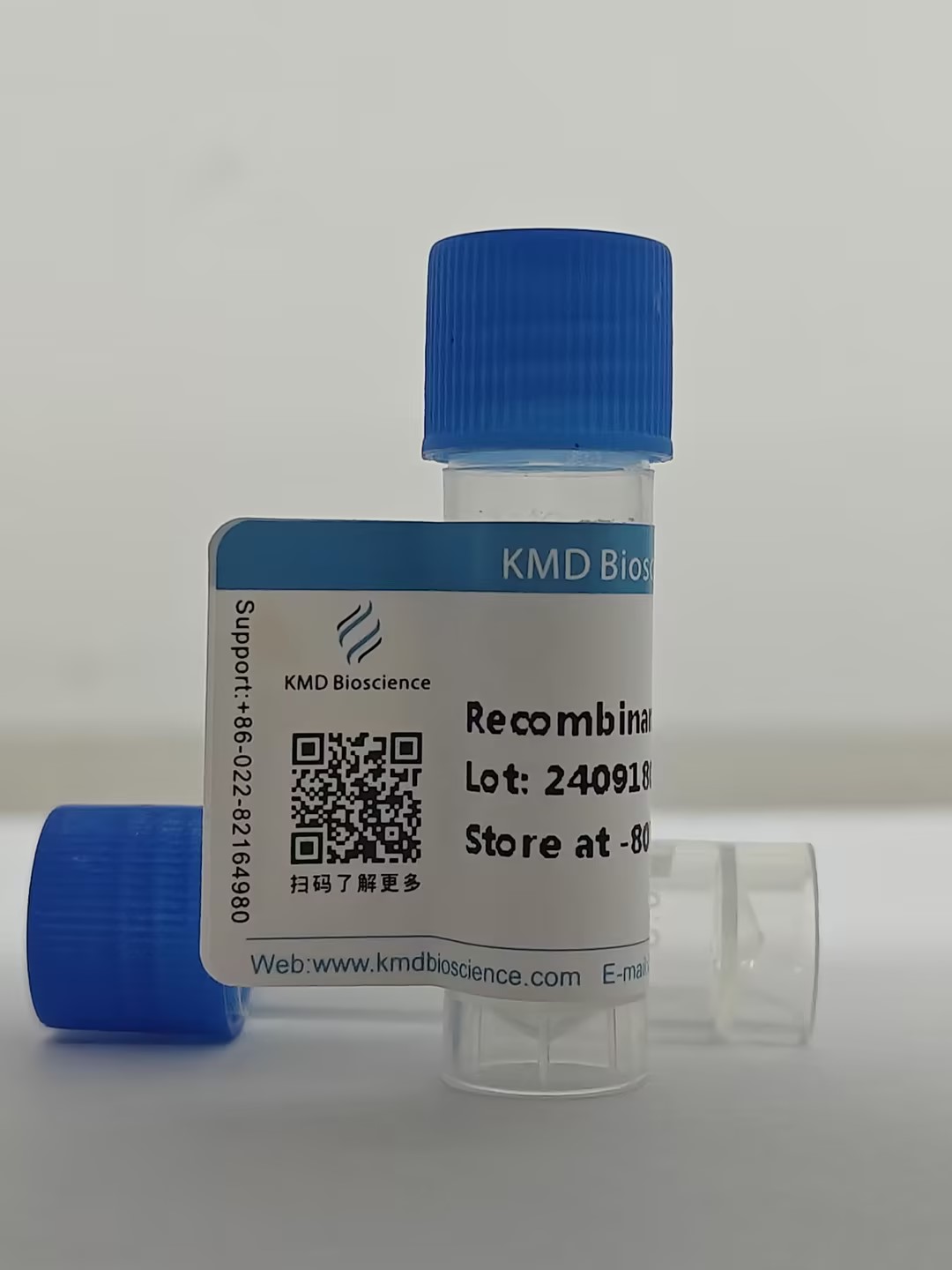
| Alias | 神经鞘胚素, Artemin Protein, Mouse Artemin Protein, hFc Tag |
| Catalog Number | KMP3865 |
| Product Description | The Mouse Artemin Protein(KMP3865) is produced in HEK293 Cells. A DNA sequence encoding the Mouse Artn (NP_033841.1) (Ala112-Gly224) is expressed with the Fc region of human IgG1 at the N-terminus. |
| Molecular Name | Artemin |
| Species | Mouse |
| Host | HEK293 Cells |
| Size | 50ug, 100ug, 200ug |
| Protein Family | CD molecule |
| Purity | >90% as determined by SDS-PAGE |
| Concentration | 联系销售经理获得最新批次的浓度 |
| Purification | Affinity purification |
| Endotoxin | <1.0 EU/ug determined by the LAL method |
| Formulation | PBS, pH7.4 |
| Background | Artemin (ARTN) is a member of glial cell line-derived neurotrophic factor (GDNF) family of ligands, and its signaling is mediated via a multi-component receptor complex including the glycosylphosphatidylinositol-anchored GDNF family receptors a (GFRa1, GFRa3) and RET receptor tyrosine kinase. The major mechanism of ARTN action is via binding to a non-signaling co-receptor. The major function of ARTN is to drive the molecule to induce migration and axonal projection from sympathetic neurons. It also promotes the survival, proliferation and neurite outgrowth of sympathetic neurons in vitro. ARTN triggers oncogenicity and metastasis by the activation of the AKT signaling pathway. Recent studies have reported that the expression of ARTN in hepatocellular carcinoma is associated with increased tumor size, quick relapse and shorter survival. Furthermore, ARTN promotes drug resistance such as antiestrogens, doxorubicin, fulvestrant, paclitaxel, tamoxifen and trastuzumab. Moreover, ARTN also stimulates the radio-therapeutic resistance. Hypoxia has been reported to regulate the cancer stem cell (CSC) population yet the underlying mechanism is poorly characterized. Artemin (ARTN) is a member of the glial cell derived neurotrophic factor family of ligands, is a hypoxia-responsive factor and is essential for hypoxia-induced CSC expansion in hepatocellular carcinoma (HCC). Clinically, elevated expression of ARTN in HCC was associated with larger tumor size, faster relapse and shorter survival. In vitro, HCC cells with forced expression of ARTN exhibited reduced apoptosis, increased proliferation, epithelial-mesenchymal transition (EMT) and enhanced motility. Additionally, ARTN dramatically increased xenograft tumor size and metastasis in vivo. Moreover, ARTN also enhanced tumorsphere formation and the tumor initiating capacity of HCC cells, consequent to expansion of the CD133+ CSC population. ARTN transcription was directly activated by hypoxia-induced factor-1α (HIF-1α) and hypoxia induced ARTN promoted EMT and increased the CSC population via AKT signaling. |
| Application | WB, ELISA |
| Recommended Dilution | ELISA: 1:100-1:1000 |
| Cross-reactivity | No cross-reactivity with other antigens or proteins. |
| Predicted Molecular Weight | 40.6 kDa |
| Predicted N Terminus | Ala 112 |
| Reconstitution | Not applicable. The product is supplied as a ready-to-use liquid formulation. |
| Storage Condition | Aliquot and store at -20℃ to -80℃. Avoid repeated freezing and thawing cycles. |
| Remarks | 收到产品后请立即按保存条件储存;使用前短暂离心,使内容物集中于管底;避免反复冻融。 |
| Shipping Condition | In general, recombinant proteins are provided as lyophilized powder which are shipped at ambient temperature. If supplied as liquid, the proteins will be shipped with dry ice. |
| Stability | Samples are stable for up to twelve months from date of receipt at -20℃ to -80℃. Store it under sterile conditions at -20℃ to -80℃. It is recommended that the protein be aliquoted for optimal storage. Avoid repeated freeze-thaw cycles. |
| Molecular Weight | 40.6 kDa |
| Cross-reactivity | No cross-reactivity with other antigens or proteins. |
| Note | 仅供科研使用 |
| ELISA IC50(ppb) | ≥ 1:1000 |
| Function | Artemin (ARTN) is a member of glial cell line-derived neurotrophic factor (GDNF) family of ligands, and its signaling is mediated via a multi-component receptor complex including the glycosylphosphatidylinositol-anchored GDNF family receptors a (GFRa1, GFRa3) and RET receptor tyrosine kinase. The major mechanism of ARTN action is via binding to a non-signaling co-receptor. The major function of ARTN is to drive the molecule to induce migration and axonal projection from sympathetic neurons. It also promotes the survival, proliferation and neurite outgrowth of sympathetic neurons in vitro. ARTN triggers oncogenicity and metastasis by the activation of the AKT signaling pathway. Recent studies have reported that the expression of ARTN in hepatocellular carcinoma is associated with increased tumor size, quick relapse and shorter survival. Furthermore, ARTN promotes drug resistance such as antiestrogens, doxorubicin, fulvestrant, paclitaxel, tamoxifen and trastuzumab. Moreover, ARTN also stimulates the radio-therapeutic resistance. Hypoxia has been reported to regulate the cancer stem cell (CSC) population yet the underlying mechanism is poorly characterized. Artemin (ARTN) is a member of the glial cell derived neurotrophic factor family of ligands, is a hypoxia-responsive factor and is essential for hypoxia-induced CSC expansion in hepatocellular carcinoma (HCC). Clinically, elevated expression of ARTN in HCC was associated with larger tumor size, faster relapse and shorter survival. In vitro, HCC cells with forced expression of ARTN exhibited reduced apoptosis, increased proliferation, epithelial-mesenchymal transition (EMT) and enhanced motility. Additionally, ARTN dramatically increased xenograft tumor size and metastasis in vivo. Moreover, ARTN also enhanced tumorsphere formation and the tumor initiating capacity of HCC cells, consequent to expansion of the CD133+ CSC population. ARTN transcription was directly activated by hypoxia-induced factor-1α (HIF-1α) and hypoxia induced ARTN promoted EMT and increased the CSC population via AKT signaling. |
| Product Declaration | 该产品仅供科研使用,不可直接用于人体或注射。 |
| Temperature Range | -20℃ ~ -80℃ |
| Solubility | 产品为即用型液体,无需复溶。 |
| Appearance | Liquid |
| Product Full Name | Mouse Artemin Protein |
| Preservative Solution | PBS, pH7.4 |
| Usage Method | 冻干粉请按“复溶”说明用无菌去离子水复溶后使用,液体产品可直接使用;具体工作浓度请参考“推荐稀释比例”。 |
| Target | Artemin |


销售微信

官方公众号


 0

