

Mouse CD4 Protein, His Tag
-
产品编号
KMP3850
-
别名
T细胞表面糖蛋白CD4, CD4 Protein, Mouse CD4 Protein, His Tag
-
目录价格
联系客服获取报价RMB
-
规格
- 50ug
- 100ug
- 200ug
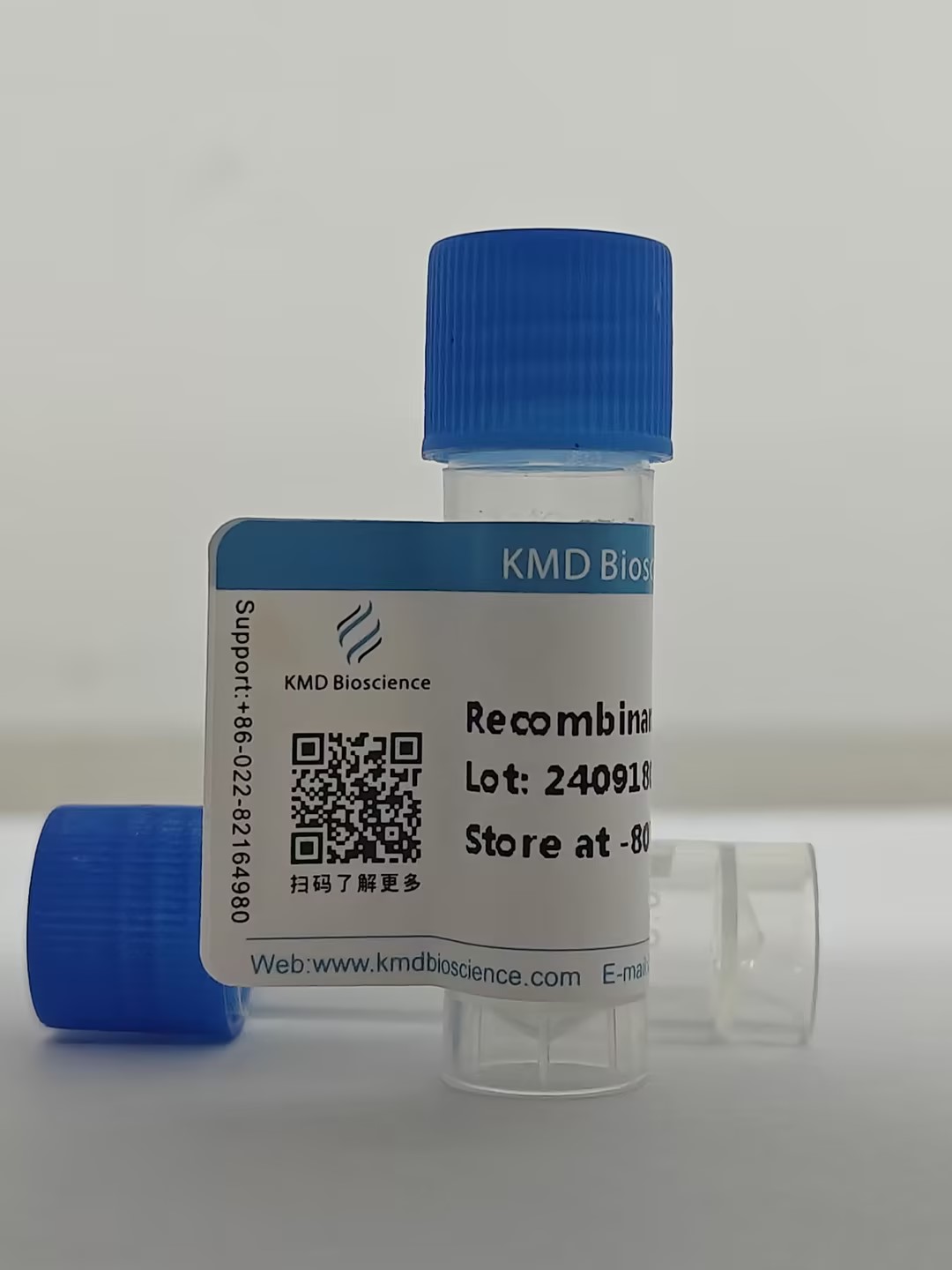
| Alias | T细胞表面糖蛋白CD4, CD4 Protein, Mouse CD4 Protein, His Tag |
| Catalog Number | KMP3850 |
| Product Description | The Mouse CD4 Protein(KMP3850) is produced in HEK293 Cells. A DNA sequence encoding the extracellular domain of Mouse CD4 (NP_038516.1) (Met1-Thr394) is expressed with a polyhistidine tag at the C-terminus. The expressed protein is biotinylated in vitro. |
| Molecular Name | CD4 |
| Species | Mouse |
| Host | HEK293 Cells |
| Size | 50ug, 100ug, 200ug |
| Protein Family | CD molecule |
| Purity | >95% as determined by SDS-PAGE |
| Concentration | 联系销售经理获得最新批次的浓度 |
| Purification | Affinity purification |
| Endotoxin | <1.0 EU/ug determined by the LAL method |
| Formulation | PBS |
| Background | T-cell surface glycoprotein CD4, is a single-pass type I membrane protein. CD4 contains three Ig-like C2-type (immunoglobulin-like) domains and one Ig-like V-type (immunoglobulin-like) domain. CD4 is a glycoprotein expressed on the surface of T helper cells, regulatory T cells, monocytes, macrophages, and dendritic cells. The CD4 surface determinant, previously associated as a phenotypic marker for helper/inducer subsets of T lymphocytes, has now been critically identified as the binding/entry protein for human immunodeficiency viruses (HIV). The human CD4 molecule is readily detectable on monocytes, T lymphocytes, and brain tissues. All human tissue sources of CD4 bind radiolabeled gp120 to the same relative degree; however, the murine homologous protein, L3T4, does not bind the HIV envelope protein. CD4 is a co-receptor that assists the T cell receptor (TCR) to activate its T cell following an interaction with an antigen-presenting cell. Using its portion that resides inside the T cell, CD4 amplifies the signal generated by the TCR. CD4 interacts directly with MHC class II molecules on the surface of the antigen-presenting cell via its extracellular domain. The CD4 molecule is currently the object of intense interest and investigation both because of its role in normal T-cell function, and because of its role in HIV infection. CD4 is a primary receptor used by HIV-1 to gain entry into host T cells. HIV infection leads to a progressive reduction of the number of T cells possessing CD4 receptors.Viral protein U (VpU) of HIV-1 plays an important role in downregulation of the main HIV-1 receptor CD4 from the surface of infected cells. Physical binding of VpU to newly synthesized CD4 in the endoplasmic reticulum is an early step in a pathway leading to proteasomal degradation of CD4. Amino acids in both helices found in the cytoplasmic region of VpU in membrane-mimicking detergent micelles experience chemical shift perturbations upon binding to CD4, whereas amino acids between the two helices and at the C-terminus of VpU show no or only small changes, respectively. Paramagnetic spin labels were attached at three sequence positions of a CD4 peptide comprising the transmembrane and cytosolic domains of the receptor. VpU binds to a membrane-proximal region in the cytoplasmic domain of CD4. |
| Application | WB, ELISA |
| Recommended Dilution | ELISA: 1:100-1:1000 |
| Cross-reactivity | No cross-reactivity with other antigens or proteins. |
| Predicted Molecular Weight | 42.8 kDa |
| Predicted N Terminus | Met |
| Reconstitution | Not applicable. The product is supplied as a ready-to-use liquid formulation. |
| Storage Condition | Aliquot and store at -20℃ to -80℃. Avoid repeated freezing and thawing cycles. |
| Remarks | 收到产品后请立即按保存条件储存;使用前短暂离心,使内容物集中于管底;避免反复冻融。 |
| Shipping Condition | In general, recombinant proteins are provided as lyophilized powder which are shipped at ambient temperature. If supplied as liquid, the proteins will be shipped with dry ice. |
| Stability | Samples are stable for up to twelve months from date of receipt at -20℃ to -80℃. Store it under sterile conditions at -20℃ to -80℃. It is recommended that the protein be aliquoted for optimal storage. Avoid repeated freeze-thaw cycles. |
| Molecular Weight | 42.8 kDa |
| Cross-reactivity | No cross-reactivity with other antigens or proteins. |
| Note | 仅供科研使用 |
| ELISA IC50(ppb) | ≥ 1:1000 |
| Function | T-cell surface glycoprotein CD4, is a single-pass type I membrane protein. CD4 contains three Ig-like C2-type (immunoglobulin-like) domains and one Ig-like V-type (immunoglobulin-like) domain. CD4 is a glycoprotein expressed on the surface of T helper cells, regulatory T cells, monocytes, macrophages, and dendritic cells. The CD4 surface determinant, previously associated as a phenotypic marker for helper/inducer subsets of T lymphocytes, has now been critically identified as the binding/entry protein for human immunodeficiency viruses (HIV). The human CD4 molecule is readily detectable on monocytes, T lymphocytes, and brain tissues. All human tissue sources of CD4 bind radiolabeled gp120 to the same relative degree; however, the murine homologous protein, L3T4, does not bind the HIV envelope protein. CD4 is a co-receptor that assists the T cell receptor (TCR) to activate its T cell following an interaction with an antigen-presenting cell. Using its portion that resides inside the T cell, CD4 amplifies the signal generated by the TCR. CD4 interacts directly with MHC class II molecules on the surface of the antigen-presenting cell via its extracellular domain. The CD4 molecule is currently the object of intense interest and investigation both because of its role in normal T-cell function, and because of its role in HIV infection. CD4 is a primary receptor used by HIV-1 to gain entry into host T cells. HIV infection leads to a progressive reduction of the number of T cells possessing CD4 receptors.Viral protein U (VpU) of HIV-1 plays an important role in downregulation of the main HIV-1 receptor CD4 from the surface of infected cells. Physical binding of VpU to newly synthesized CD4 in the endoplasmic reticulum is an early step in a pathway leading to proteasomal degradation of CD4. Amino acids in both helices found in the cytoplasmic region of VpU in membrane-mimicking detergent micelles experience chemical shift perturbations upon binding to CD4, whereas amino acids between the two helices and at the C-terminus of VpU show no or only small changes, respectively. Paramagnetic spin labels were attached at three sequence positions of a CD4 peptide comprising the transmembrane and cytosolic domains of the receptor. VpU binds to a membrane-proximal region in the cytoplasmic domain of CD4. |
| Product Declaration | 该产品仅供科研使用,不可直接用于人体或注射。 |
| Temperature Range | -20℃ ~ -80℃ |
| Solubility | 产品为即用型液体,无需复溶。 |
| Appearance | Liquid |
| Product Full Name | Mouse CD4 Protein |
| Preservative Solution | PBS |
| Usage Method | 冻干粉请按“复溶”说明用无菌去离子水复溶后使用,液体产品可直接使用;具体工作浓度请参考“推荐稀释比例”。 |
| Target | CD4 |


销售微信

官方公众号


 0


