Canine SDF-1 Protein
-
产品编号
KMP3603
-
别名
基质细胞衍生因子-1, SDF-1 Protein, Canine SDF-1 Protein
-
目录价格
联系客服获取报价RMB
-
规格
- 50ug
- 100ug
- 200ug
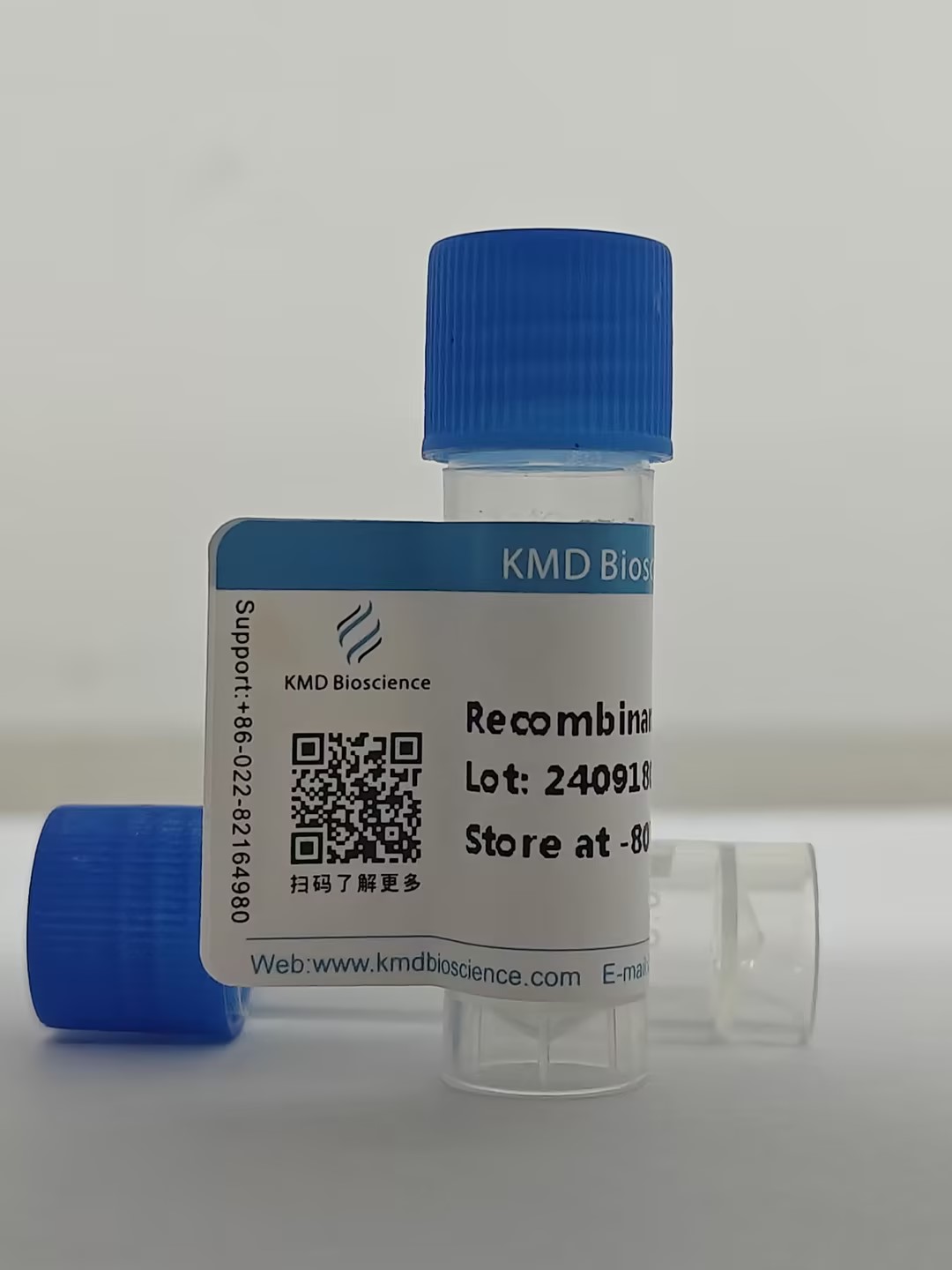
| Alias | 基质细胞衍生因子-1, SDF-1 Protein, Canine SDF-1 Protein |
| Catalog Number | KMP3603 |
| Product Description | The Canine SDF-1 Protein(KMP3603) is produced in E. coli. A DNA sequence encoding the Canine CXCL12 (NP_001121569.1) (Lys22-Met93) is expressed with a N-terminal Met. |
| Molecular Name | SDF-1 |
| Species | Canine |
| Host | E. coli |
| Size | 50ug, 100ug, 200ug |
| Protein Family | CD molecule |
| Purity | >95% as determined by SDS-PAGE |
| Concentration | 联系销售经理获得最新批次的浓度 |
| Purification | Affinity purification |
| Endotoxin | <1.0 EU/ug determined by the LAL method |
| Formulation | 50mM Tris, 500mM NaCl, pH8.0 |
| Background | The human stromal cell-derived factor-1 (SDF1), also known as CXCL12, is a small (8 kDa) cytokine highly conserved chemotactic cytokine belonging to the large family of CXC chemokines. SDF1 is expressed in two isoforms from a single gene that encodes two splice variants, SDF1α and SDF1β, which are identical except for the four residues present in the C-terminus of SDF1β but absent from SDF1α. The chemokine CXCL12 [stromal cell-derived factor-1 (SDF-1)] binds primarily to CXC receptor 4 (CXCR4; CD184). The binding of CXCL12 to CXCR4 induces intracellular signaling through several divergent pathways initiating signals related to chemotaxis, cell survival and/or proliferation, increase in intracellular calcium, and gene transcription. CXCL12 and CXCR4 that have been widely characterized in peripheral tissues and delineate their main functions in the CNS. Extensive evidence supports CXCL12 as a key regulator for early development of the CNS. In the mature CNS, CXCL12 modulates neurotransmission, neurotoxicity and neuroglial interactions. CXCL12 has crucial roles in the formation of multiple organ systems during embryogenesis and in the regulation of bone marrow haematopoiesis and immune function in the postnatal organism. Although considered an important factor in normal bone metabolism, recent studies implicate CXCL12 in the pathogenesis of several diseases involving the skeleton, including rheumatoid arthritis and cancers that metastasize to bone. The CXCL12/CXCR4 axis is involved in tumor progression, angiogenesis, metastasis, and survival. Pathologically enhanced CXCL12 signaling may promote the formation of new vessels through recruiting circulating endothelial progenitor cells or directly enhancing the migration/growth of endothelial cells. Therefore, CXCL12 signaling represents an important mechanism that regulates brain tumor angiogenesis/vasculogenesis and may provide potential targets for anti-angiogenic therapy in malignant gliomas. |
| Application | WB, ELISA |
| Recommended Dilution | ELISA: 1:100-1:1000 |
| Cross-reactivity | No cross-reactivity with other antigens or proteins. |
| Predicted Molecular Weight | 8.6 kDa |
| Predicted N Terminus | Lys 22 |
| Reconstitution | Not applicable. The product is supplied as a ready-to-use liquid formulation. |
| Storage Condition | Aliquot and store at -20℃ to -80℃. Avoid repeated freezing and thawing cycles. |
| Remarks | 收到产品后请立即按保存条件储存;使用前短暂离心,使内容物集中于管底;避免反复冻融。 |
| Shipping Condition | In general, recombinant proteins are provided as lyophilized powder which are shipped at ambient temperature. If supplied as liquid, the proteins will be shipped with dry ice. |
| Stability | Samples are stable for up to twelve months from date of receipt at -20℃ to -80℃. Store it under sterile conditions at -20℃ to -80℃. It is recommended that the protein be aliquoted for optimal storage. Avoid repeated freeze-thaw cycles. |
| Molecular Weight | 8.6 kDa |
| Cross-reactivity | No cross-reactivity with other antigens or proteins. |
| Note | 仅供科研使用 |
| ELISA IC50(ppb) | ≥ 1:1000 |
| Function | The human stromal cell-derived factor-1 (SDF1), also known as CXCL12, is a small (8 kDa) cytokine highly conserved chemotactic cytokine belonging to the large family of CXC chemokines. SDF1 is expressed in two isoforms from a single gene that encodes two splice variants, SDF1α and SDF1β, which are identical except for the four residues present in the C-terminus of SDF1β but absent from SDF1α. The chemokine CXCL12 [stromal cell-derived factor-1 (SDF-1)] binds primarily to CXC receptor 4 (CXCR4; CD184). The binding of CXCL12 to CXCR4 induces intracellular signaling through several divergent pathways initiating signals related to chemotaxis, cell survival and/or proliferation, increase in intracellular calcium, and gene transcription. CXCL12 and CXCR4 that have been widely characterized in peripheral tissues and delineate their main functions in the CNS. Extensive evidence supports CXCL12 as a key regulator for early development of the CNS. In the mature CNS, CXCL12 modulates neurotransmission, neurotoxicity and neuroglial interactions. CXCL12 has crucial roles in the formation of multiple organ systems during embryogenesis and in the regulation of bone marrow haematopoiesis and immune function in the postnatal organism. Although considered an important factor in normal bone metabolism, recent studies implicate CXCL12 in the pathogenesis of several diseases involving the skeleton, including rheumatoid arthritis and cancers that metastasize to bone. The CXCL12/CXCR4 axis is involved in tumor progression, angiogenesis, metastasis, and survival. Pathologically enhanced CXCL12 signaling may promote the formation of new vessels through recruiting circulating endothelial progenitor cells or directly enhancing the migration/growth of endothelial cells. Therefore, CXCL12 signaling represents an important mechanism that regulates brain tumor angiogenesis/vasculogenesis and may provide potential targets for anti-angiogenic therapy in malignant gliomas. |
| Product Declaration | 该产品仅供科研使用,不可直接用于人体或注射。 |
| Temperature Range | -20℃ ~ -80℃ |
| Solubility | 产品为即用型液体,无需复溶。 |
| Appearance | Liquid |
| Product Full Name | Canine SDF-1 Protein |
| Preservative Solution | 50mM Tris, 500mM NaCl, pH8.0 |
| Usage Method | 冻干粉请按“复溶”说明用无菌去离子水复溶后使用,液体产品可直接使用;具体工作浓度请参考“推荐稀释比例”。 |
| Target | SDF-1 |


销售微信

官方公众号


 0