

Human VCAM1 Protein, hFc Tag
-
产品编号
KMP2490
-
别名
血管细胞粘附分子1, Human VCAM1 Protein, hFc Tag, VCAM1
-
目录价格
联系客服获取报价RMB
-
规格
- 50ug
- 100ug
- 200ug
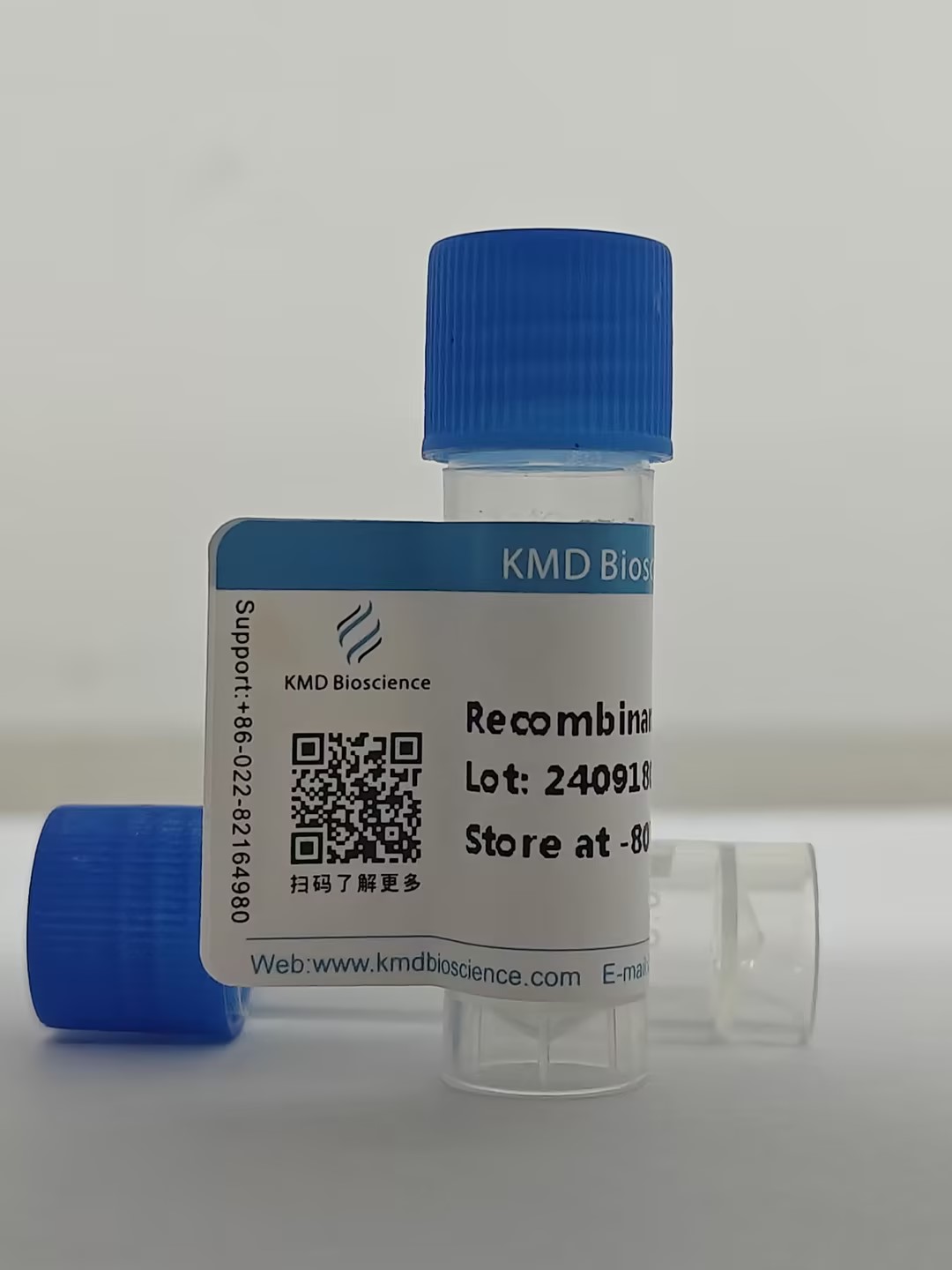
| Alias | 血管细胞粘附分子1, Human VCAM1 Protein, hFc Tag, VCAM1 |
| Catalog Number | KMP2490 |
| Product Description | The Human VCAM1 Protein(KMP2490) is produced in HEK293 Cells. The target gene encoding the human VCAM1 (NP_001069.1) (Met 1-Pro 697) is expressed with the Fc region of human IgG1 at the C-terminus. The purified protein is biotinylated in vitro. |
| Molecular Name | VCAM1 |
| Species | Human |
| Host | HEK293 Cells |
| Size | 50ug, 100ug, 200ug |
| Protein Family | CD molecule |
| Purity | >95% as determined by SDS-PAGE |
| Concentration | 联系销售经理获得最新批次的浓度 |
| Purification | Affinity purification |
| Endotoxin | <1.0 EU/ug determined by the LAL method |
| Formulation | PBS, pH7.4 |
| Background | Vascular cell adhesion molecule 1 (VCAM-1), also known as CD106, is a cell surface sialoglycoprotein belonging to the immunoglobulin superfamily. Two forms of VCAM-1 with either six or seven extracellular Ig-like domains are generated by alternative splicing, with the longer form predominant. VCAM-1 is an endothelial ligand for very late antigen-4 (VLA-4) and α4ß7 integrin expressed on leukocytes, and thus mediates leukocyte-endothelial cell adhesion and signal transduction. VCAM-1 expression is induced on endothelial cells during inflammatory bowel disease, atherosclerosis, allograft rejection, infection, and asthmatic responses. During these responses, VCAM-1 forms a scaffold for leukocyte migration. VCAM-1 also activates signals within endothelial cells resulting in the opening of an "endothelial cell gate" through which leukocytes migrate. VCAM-1 has been identified as a potential anti-inflammatory therapeutic target, the hypothesis being that reduced expression of VCAM-1 will slow the development of atherosclerosis. In addition, VCAM-1-activated signals in endothelial cells are regulated by cytokines indicating that it is important to consider both endothelial cell adhesion molecule expression and function during inflammatory processes. |
| Application | WB, ELISA |
| Recommended Dilution | ELISA: 1:100-1:1000 |
| Cross-reactivity | No cross-reactivity with other antigens or proteins. |
| Predicted Molecular Weight | 101 kDa |
| Predicted N Terminus | Met |
| Reconstitution | Not applicable. The product is supplied as a ready-to-use liquid formulation. |
| Storage Condition | Aliquot and store at -20℃ to -80℃. Avoid repeated freezing and thawing cycles. |
| Remarks | 收到产品后请立即按保存条件储存;使用前短暂离心,使内容物集中于管底;避免反复冻融。 |
| Shipping Condition | In general, recombinant proteins are provided as lyophilized powder which are shipped at ambient temperature. If supplied as liquid, the proteins will be shipped with dry ice. |
| Stability | Samples are stable for up to twelve months from date of receipt at -20℃ to -80℃. Store it under sterile conditions at -20℃ to -80℃. It is recommended that the protein be aliquoted for optimal storage. Avoid repeated freeze-thaw cycles. |
| Molecular Weight | 101 kDa |
| Cross-reactivity | No cross-reactivity with other antigens or proteins. |
| Note | 仅供科研使用 |
| ELISA IC50(ppb) | ≥ 1:1000 |
| Function | Vascular cell adhesion molecule 1 (VCAM-1), also known as CD106, is a cell surface sialoglycoprotein belonging to the immunoglobulin superfamily. Two forms of VCAM-1 with either six or seven extracellular Ig-like domains are generated by alternative splicing, with the longer form predominant. VCAM-1 is an endothelial ligand for very late antigen-4 (VLA-4) and α4ß7 integrin expressed on leukocytes, and thus mediates leukocyte-endothelial cell adhesion and signal transduction. VCAM-1 expression is induced on endothelial cells during inflammatory bowel disease, atherosclerosis, allograft rejection, infection, and asthmatic responses. During these responses, VCAM-1 forms a scaffold for leukocyte migration. VCAM-1 also activates signals within endothelial cells resulting in the opening of an "endothelial cell gate" through which leukocytes migrate. VCAM-1 has been identified as a potential anti-inflammatory therapeutic target, the hypothesis being that reduced expression of VCAM-1 will slow the development of atherosclerosis. In addition, VCAM-1-activated signals in endothelial cells are regulated by cytokines indicating that it is important to consider both endothelial cell adhesion molecule expression and function during inflammatory processes. |
| Product Declaration | 该产品仅供科研使用,不可直接用于人体或注射。 |
| Temperature Range | -20℃ ~ -80℃ |
| Solubility | 产品为即用型液体,无需复溶。 |
| Appearance | Liquid |
| Product Full Name | Human VCAM1 Protein |
| Preservative Solution | PBS, pH7.4 |
| Usage Method | 冻干粉请按“复溶”说明用无菌去离子水复溶后使用,液体产品可直接使用;具体工作浓度请参考“推荐稀释比例”。 |
| Target | VCAM1 |


销售微信

官方公众号


 0

