Rabbit Anti-NLK Polyclonal Antibody
-
产品编号
PAV2544
-
别名
glucose-6-phosphate isomerase, AMF, CNSHA4, GNPI, NLK, PGI, PHI, SA-36, SA36
-
目录价格
InquiryRMB
-
规格
- 100ul
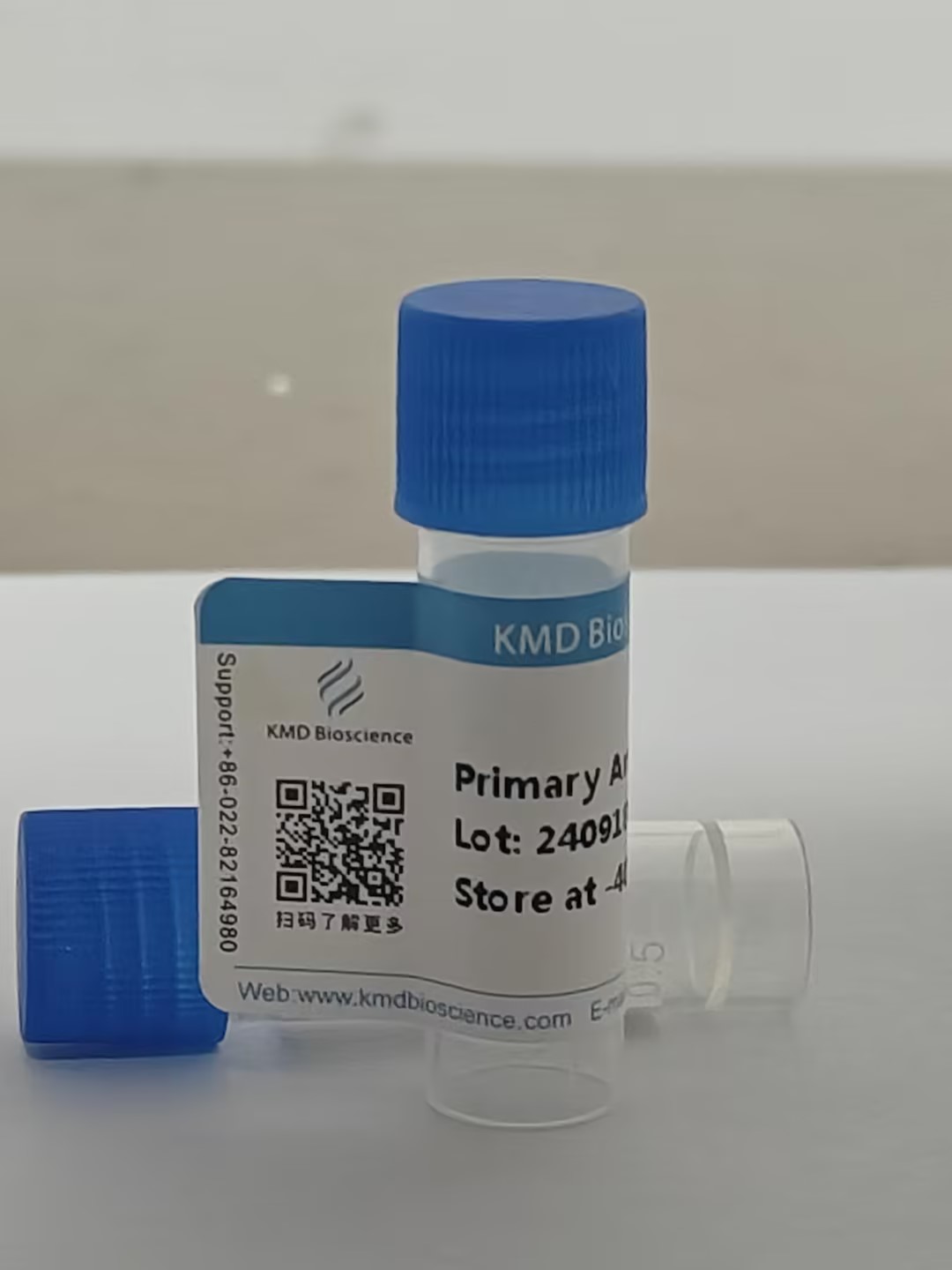
| Alias | glucose-6-phosphate isomerase, AMF, CNSHA4, GNPI, NLK, PGI, PHI, SA-36, SA36 |
| Catalog Number | PAV2544 |
| Product Description | Rabbit polyclonal antibody raised against human GPI (Serine/threonine-protein kinase NLK). Affinity purified from rabbit antiserum by antigen-specific affinity chromatography. Validated applications: WB, ELISA. Supplied as liquid in PBS containing 50% glycerol and 0.02% sodium azide at 1 mg/ml. |
| Molecular Name | GPI |
| Species | Human, Rat, Mouse |
| Host | Rabbit |
| Size | 100ul |
| Clonity | Polyclonal |
| Protein Family | 蛋白激酶 |
| Concentration | 1 mg/ml |
| Purification | affinity-chromatography |
| Formulation | supply in PBS containing 50% glycerol, and 0.02% sodium azide. |
| Background | This gene encodes a member of the glucose phosphate isomerase protein family. The encoded protein has been identified as a moonlighting protein based on its ability to perform mechanistically distinct functions. In the cytoplasm, the gene product functions as a glycolytic enzyme (glucose-6-phosphate isomerase) that interconverts glucose-6-phosphate and fructose-6-phosphate. Extracellularly, the encoded protein (also referred to as neuroleukin) functions as a neurotrophic factor that promotes survival of skeletal motor neurons and sensory neurons, and as a lymphokine that induces immunoglobulin secretion. The encoded protein is also referred to as autocrine motility factor based on an additional function as a tumor-secreted cytokine and angiogenic factor. Defects in this gene are the cause of nonspherocytic hemolytic anemia and a severe enzyme deficiency can be associated with hydrops fetalis, immediate neonatal death and neurological impairment. Alternative splicing results in multiple transcript variants. [provided by RefSeq, Aug 2016] |
| Immunogen | This antibody was raised against from part region of human GPI protein (UniProt: Q9UBE8) |
| Application | WB, ELISA |
| Recommended Dilution | WB 1:500-2000 ELISA 1:5000-20000 |
| Gene ID | 2821 |
| Tag | Unconjugated |
| Cross-reactivity | Human, Rat, Mouse |
| Predicted Molecular Weight | ≈58.3 kDa |
| Storage Condition | Store at 4℃ for for short term storage. It is recommended to aliquote to ~10ul per vial and store at -20℃ for long term storage. Avoid repeated freezing and thawing cycles. |
| Shipping Condition | This product is shipped on blue ice. |
| Molecular Weight | 58.3 kDa |
| Cross-reactivity | Human, Rat, Mouse |
| Uniprot ID | Q9UBE8 |
| Note | Gene ID: 2821; UniProt: Q9UBE8; Chromosome: 19q13.11; Predicted MW: 58.3 kDa |
| Function | Serine/threonine-protein kinase that regulates a number of transcription factors with key roles in cell fate determination. Positive effector of the non-canonical Wnt signaling pathway, acting downstream of WNT5A, MAP3K7/TAK1 and HIPK2. Negative regulator of the canonical Wnt/beta-catenin signaling pathway. Binds to and phosphorylates TCF7L2/TCF4 and LEF1, promoting the dissociation of the TCF7L2/LEF1/beta-catenin complex from DNA, as well as the ubiquitination and subsequent proteolysis of LEF1. Together these effects inhibit the transcriptional activation of canonical Wnt/beta-catenin target genes. Negative regulator of the Notch signaling pathway. Binds to and phosphorylates NOTCH1, thereby preventing the formation of a transcriptionally active ternary complex of NOTCH1, RBPJ/RBPSUH and MAML1. Negative regulator of the MYB family of transcription factors. Phosphorylation of MYB leads to its subsequent proteolysis while phosphorylation of MYBL1 and MYBL2 inhibits their interaction with the coactivator CREBBP. |
| Product Declaration | 本产品仅用于研究用途(RUO)。不能用于诊断或直接用于人体实验。 |
| Product Full Name | Rabbit Anti-Human GPI Polyclonal Antibody |
| Target | GPI |


销售微信

官方公众号


 0