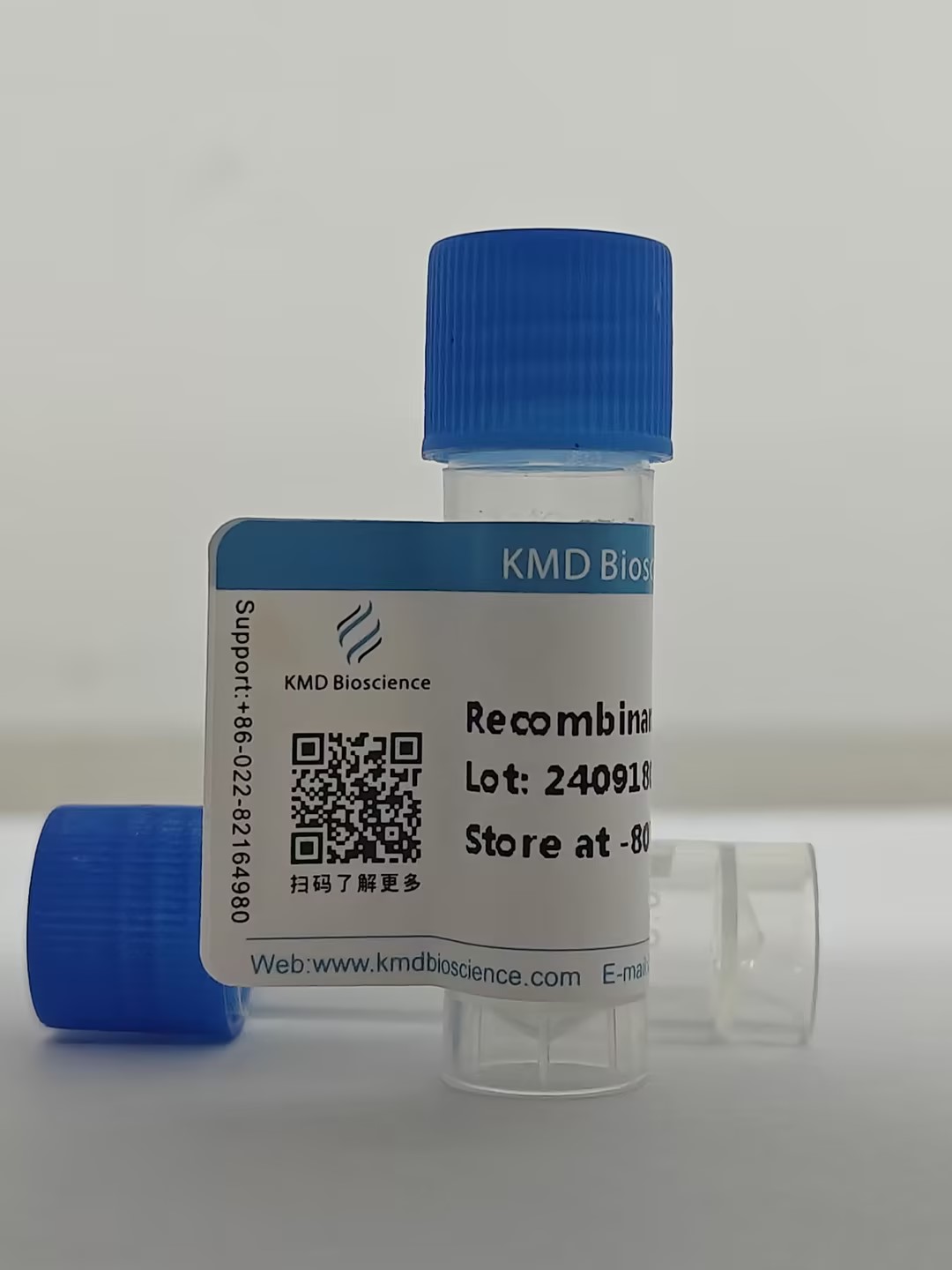
Rabbit Anti-PTPRB Polyclonal Antibody
-
产品编号
PAV3208
-
别名
protein tyrosine phosphatase receptor type B, HPTP-BETA, HPTPB, PTPB, R-PTP-BETA, VEPTP
-
目录价格
InquiryRMB
-
规格
- 100ul

| Alias | protein tyrosine phosphatase receptor type B, HPTP-BETA, HPTPB, PTPB, R-PTP-BETA, VEPTP |
| Catalog Number | PAV3208 |
| Product Description | Rabbit polyclonal antibody raised against human PTPRB (Receptor-type tyrosine-protein phosphatase beta). Affinity purified from rabbit antiserum by antigen-specific affinity chromatography. Validated applications: WB, ELISA. Supplied as liquid in PBS containing 50% glycerol and 0.02% sodium azide at 1 mg/ml. |
| Molecular Name | PTPRB |
| Species | Human |
| Host | Rabbit |
| Size | 100ul |
| Clonity | Polyclonal |
| Protein Family | 磷酸酶 |
| Concentration | 1 mg/ml |
| Purification | affinity-chromatography |
| Formulation | supply in PBS containing 50% glycerol, and 0.02% sodium azide. |
| Background | The protein encoded by this gene is a member of the protein tyrosine phosphatase (PTP) family. PTPs are known to be signaling molecules that regulate a variety of cellular processes including cell growth, differentiation, mitotic cycle, and oncogenic transformation. This PTP contains an extracellular domain, a single transmembrane segment and one intracytoplasmic catalytic domain, thus belongs to receptor type PTP. The extracellular region of this PTP is composed of multiple fibronectin type_III repeats, which was shown to interact with neuronal receptor and cell adhesion molecules, such as contactin and tenascin C. This protein was also found to interact with sodium channels, and thus may regulate sodium channels by altering tyrosine phosphorylation status. The functions of the interaction partners of this protein implicate the roles of this PTP in cell adhesion, neurite growth, and neuronal differentiation. Alternate transcript variants encoding different isoforms have been found for this gene. [provided by RefSeq, May 2011] |
| Immunogen | This antibody was raised against from part region of human PTPRB protein (UniProt: P23467) |
| Application | WB, ELISA |
| Recommended Dilution | WB 1:500-2000 ELISA 1:5000-20000 |
| Gene ID | 5787 |
| Tag | Unconjugated |
| Cross-reactivity | Human |
| Predicted Molecular Weight | ≈224.3 kDa |
| Storage Condition | Store at 4℃ for for short term storage. It is recommended to aliquote to ~10ul per vial and store at -20℃ for long term storage. Avoid repeated freezing and thawing cycles. |
| Shipping Condition | This product is shipped on blue ice. |
| Molecular Weight | 224.3 kDa |
| Cross-reactivity | Human |
| Uniprot ID | P23467 |
| Note | Gene ID: 5787; UniProt: P23467; Chromosome: 12q15; Predicted MW: 224.3 kDa |
| Function | Plays an important role in blood vessel remodeling and angiogenesis. Not necessary for the initial formation of blood vessels, but is essential for their maintenance and remodeling. Can induce dephosphorylation of TEK/TIE2, CDH5/VE-cadherin and KDR/VEGFR-2. Regulates angiopoietin-TIE2 signaling in endothelial cells. Acts as a negative regulator of TIE2, and controls TIE2 driven endothelial cell proliferation, which in turn affects blood vessel remodeling during embryonic development and determines blood vessel size during perinatal growth. Essential for the maintenance of endothelial cell contact integrity and for the adhesive function of VE-cadherin in endothelial cells and this requires the presence of plakoglobin (By similarity). |
| Product Declaration | 本产品仅用于研究用途(RUO)。不能用于诊断或直接用于人体实验。 |
| Product Full Name | Rabbit Anti-Human PTPRB Polyclonal Antibody |
| Target | PTPRB |


销售微信

官方公众号


 0