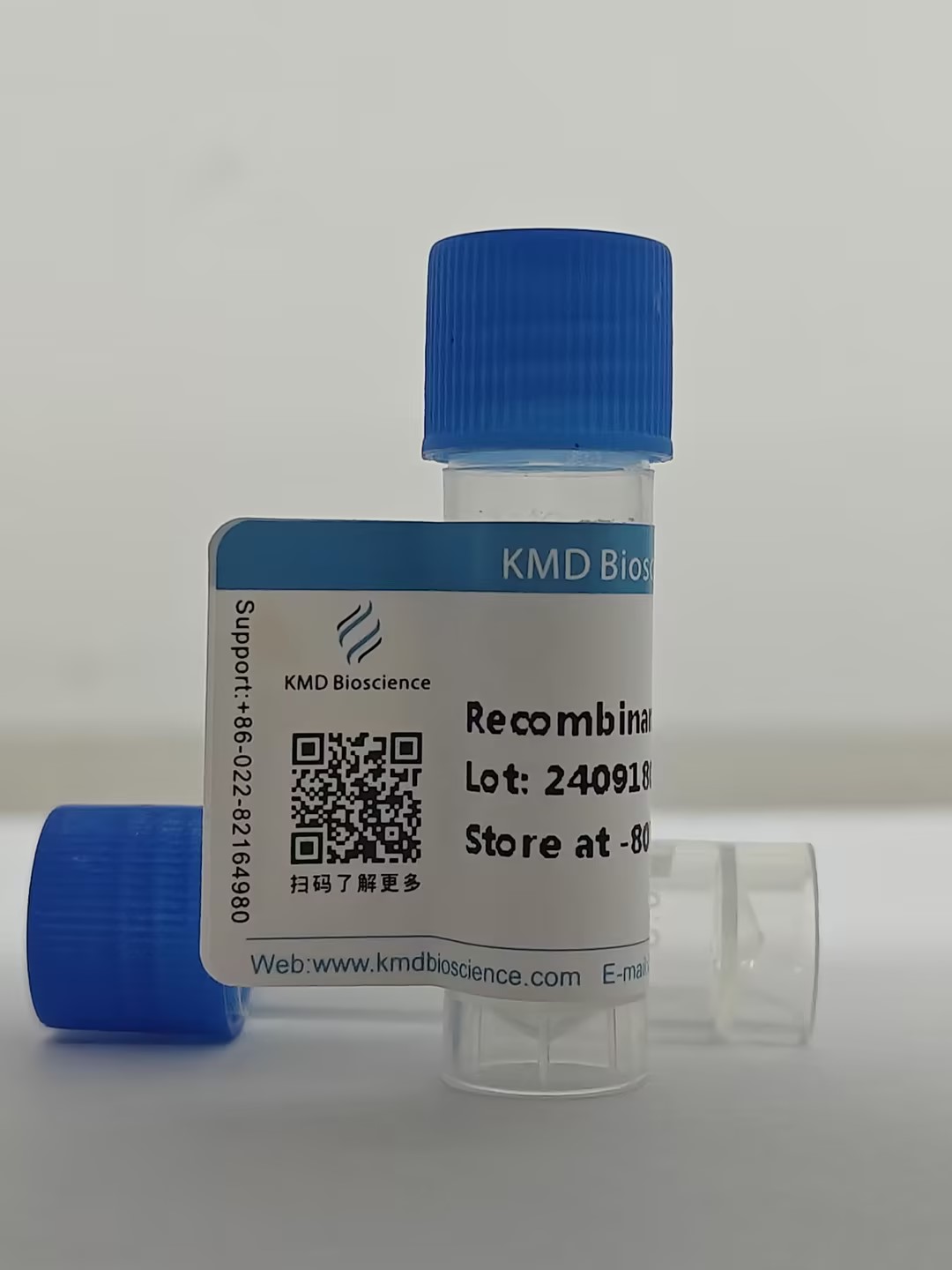
Rabbit Anti-PTPA Polyclonal Antibody
-
产品编号
PAV3207
-
别名
protein phosphatase 2 phosphatase activator, PARK25, PP2A, PPP2R4, PR53
-
目录价格
InquiryRMB
-
规格
- 100ul

| Alias | protein phosphatase 2 phosphatase activator, PARK25, PP2A, PPP2R4, PR53 |
| Catalog Number | PAV3207 |
| Product Description | Rabbit polyclonal antibody raised against human PTPA (Receptor-type tyrosine-protein phosphatase alpha). Affinity purified from rabbit antiserum by antigen-specific affinity chromatography. Validated applications: WB, ELISA. Supplied as liquid in PBS containing 50% glycerol and 0.02% sodium azide at 1 mg/ml. |
| Molecular Name | PTPA |
| Species | Human, Mouse |
| Host | Rabbit |
| Size | 100ul |
| Clonity | Polyclonal |
| Protein Family | 磷酸酶 |
| Concentration | 1 mg/ml |
| Purification | affinity-chromatography |
| Formulation | supply in PBS containing 50% glycerol, and 0.02% sodium azide. |
| Background | Protein phosphatase 2A (PP2A) is one of the four major Ser/Thr phosphatases and is implicated in the negative control of cell growth and division. The core PP2A holoenzyme is a heterotrimer of a structural A subunit, a catalytic C subunit, and one of several regulatory B subunits, which are grouped into distinct families (B/PR55, B'/PR61, B''/PR72) that confer different substrate specificities and localizations. This gene, PTPA, does not encode one of these conventional B-type regulatory subunits. Rather, this PTPA gene encodes a peptidyl-prolyl cis-trans isomerase that acts as a Mg-ion and ATP-dependent activation chaperone, transiently engaging the PP2A A-C core dimer to restore its catalytic activity, including a distinct phosphotyrosyl phosphatase activity. Unlike classic B-family subunits, which dock stably onto the holoenzyme to alter its specificity, PTPA dissociates after activation rather than remaining a permanent structural component. PTPA was historically classified within the B' family, but this reflects an older nomenclature scheme rather than its actual mechanism, which is now understood to be that of a dedicated activator rather than a structural regulatory subunit. Note that PP2A was used as a symbol for this gene in early publications when its distinct chaperone function was not yet clearly distinguished from the holoenzyme it regulates. Alternative splicing results in multiple transcript variants encoding different isoforms. [provided by RefSeq, Aug 2026] |
| Immunogen | This antibody was raised against from part region of human PTPA protein (UniProt: P18433) |
| Application | WB, ELISA |
| Recommended Dilution | WB 1:500-2000 ELISA 1:5000-20000 |
| Gene ID | 5524 |
| Tag | Unconjugated |
| Cross-reactivity | Human, Mouse |
| Predicted Molecular Weight | ≈90.7 kDa |
| Storage Condition | Store at 4℃ for for short term storage. It is recommended to aliquote to ~10ul per vial and store at -20℃ for long term storage. Avoid repeated freezing and thawing cycles. |
| Shipping Condition | This product is shipped on blue ice. |
| Molecular Weight | 90.7 kDa |
| Cross-reactivity | Human, Mouse |
| Uniprot ID | P18433 |
| Note | Gene ID: 5524; UniProt: P18433; Chromosome: 9q34.11; Predicted MW: 90.7 kDa |
| Function | Tyrosine protein phosphatase which is involved in integrin-mediated focal adhesion formation (By similarity). Following integrin engagement, specifically recruits BCAR3, BCAR1 and CRK to focal adhesions thereby promoting SRC-mediated phosphorylation of BRAC1 and the subsequent activation of PAK and small GTPase RAC1 and CDC42 (By similarity). |
| Product Declaration | 本产品仅用于研究用途(RUO)。不能用于诊断或直接用于人体实验。 |
| Product Full Name | Rabbit Anti-Human PTPA Polyclonal Antibody |
| Target | PTPA |


销售微信

官方公众号


 0