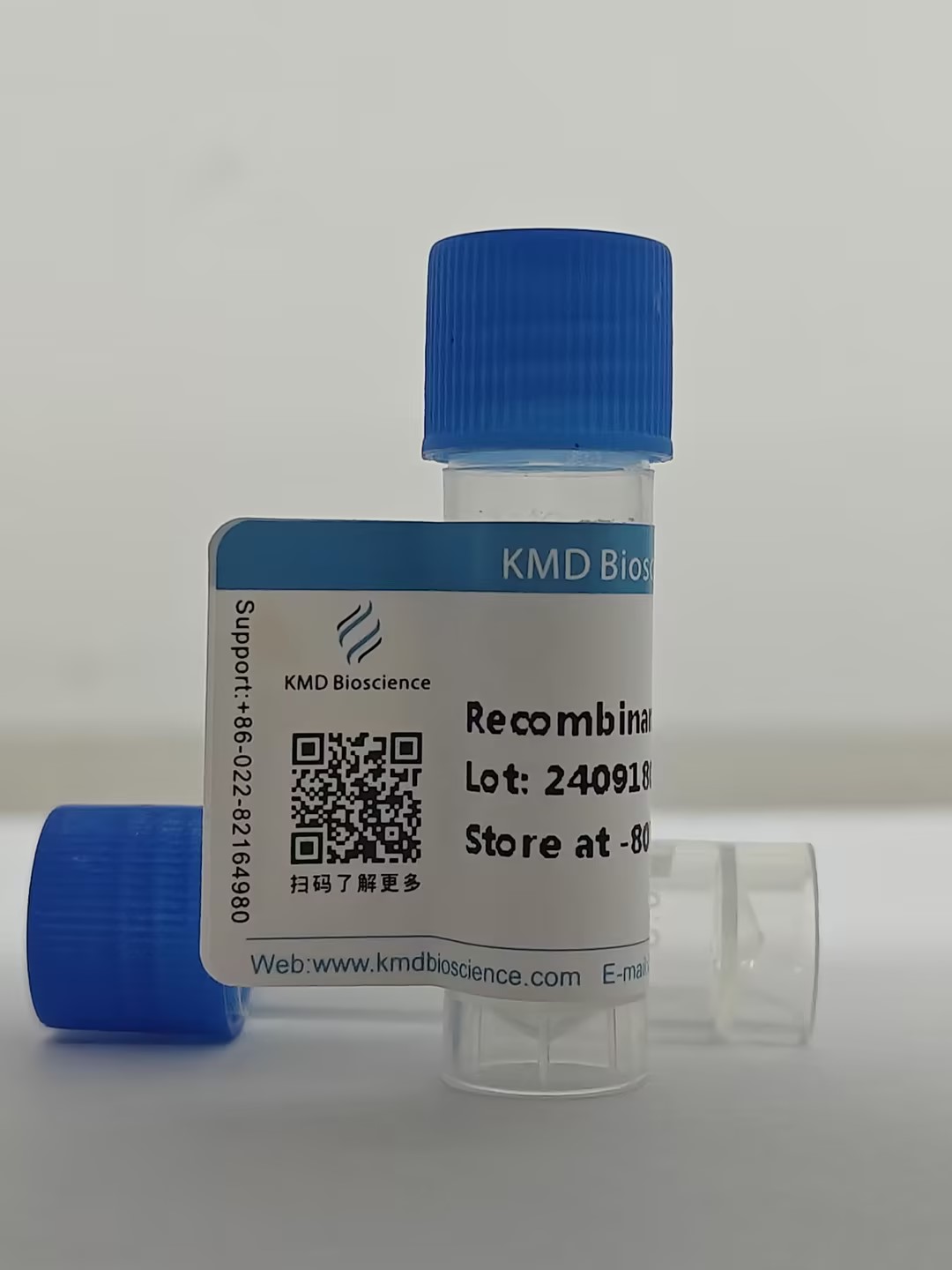
Rabbit Anti-NOD1 Polyclonal Antibody
-
产品编号
PAV2552
-
别名
nucleotide binding oligomerization domain containing 1, CARD4, CLR7.1, NLRC1, hNod1
-
目录价格
InquiryRMB
-
规格
- 100ul

| Alias | nucleotide binding oligomerization domain containing 1, CARD4, CLR7.1, NLRC1, hNod1 |
| Catalog Number | PAV2552 |
| Product Description | Rabbit polyclonal antibody raised against human NOD1 (Nucleotide-binding oligomerization domain-containing protein 1). Affinity purified from rabbit antiserum by antigen-specific affinity chromatography. Validated applications: WB. Supplied as liquid in PBS containing 50% glycerol and 0.02% sodium azide at 1 mg/ml. |
| Molecular Name | NOD1 |
| Species | Human, Mouse |
| Host | Rabbit |
| Size | 100ul |
| Clonity | Polyclonal |
| Protein Family | 模式识别受体 |
| Concentration | 1 mg/ml |
| Purification | affinity-chromatography |
| Formulation | supply in PBS containing 50% glycerol, and 0.02% sodium azide. |
| Background | This gene encodes a member of the nucleotide-binding oligomerization domain (NOD)-like receptor (NLR) family of proteins. The encoded protein plays a role in innate immunity by acting as a pattern-recognition receptor (PRR) that binds bacterial peptidoglycans and initiates inflammation. This protein has also been implicated in the immune response to viral and parasitic infection. Major structural features of this protein include an N-terminal caspase recruitment domain (CARD), a centrally located nucleotide-binding domain (NBD), and 10 tandem leucine-rich repeats (LRRs) in its C terminus. The CARD is involved in apoptotic signaling, LRRs participate in protein-protein interactions, and mutations in the NBD may affect the process of oligomerization and subsequent function of the LRR domain. Mutations in this gene are associated with asthma, inflammatory bowel disease, Behcet disease and sarcoidosis in human patients. [provided by RefSeq, Aug 2017] |
| Immunogen | This antibody was raised against from part region of human NOD1 protein (UniProt: Q9Y239) |
| Application | WB |
| Recommended Dilution | WB 1:500-2000 |
| Gene ID | 10392 |
| Tag | Unconjugated |
| Cross-reactivity | Human, Mouse |
| Predicted Molecular Weight | ≈107.7 kDa |
| Storage Condition | Store at 4℃ for for short term storage. It is recommended to aliquote to ~10ul per vial and store at -20℃ for long term storage. Avoid repeated freezing and thawing cycles. |
| Shipping Condition | This product is shipped on blue ice. |
| Molecular Weight | 107.7 kDa |
| Cross-reactivity | Human, Mouse |
| Uniprot ID | Q9Y239 |
| Note | Gene ID: 10392; UniProt: Q9Y239; Chromosome: 7p14.3; Predicted MW: 107.7 kDa |
| Function | Pattern recognition receptor (PRR) that detects bacterial peptidoglycan fragments and other danger signals and thus participates in both innate and adaptive immune responses. Specifically recognizes and binds gamma-D-glutamyl-meso-diaminopimelic acid (iE-DAP), a dipeptide present in peptidoglycan of Gram-negative bacteria. Preferentially binds iE-DAP in tripeptide-containing muropeptides (MurNAc-TriDAP or TriDAP). Ligand binding triggers oligomerization that facilitates the binding and subsequent activation of the proximal adapter receptor-interacting RIPK2. Following recruitment, RIPK2 undergoes 'Met-1'- (linear) and 'Lys-63'-linked polyubiquitination by E3 ubiquitin-protein ligases XIAP, BIRC2, BIRC3 and the LUBAC complex, becoming a scaffolding protein for downstream effectors, triggering activation of the NF-kappa-B and MAP kinases signaling. This in turn leads to the transcriptional activation of hundreds of genes involved in immune response. |
| Product Declaration | 本产品仅用于研究用途(RUO)。不能用于诊断或直接用于人体实验。 |
| Product Full Name | Rabbit Anti-Human NOD1 Polyclonal Antibody |
| Target | NOD1 |


销售微信

官方公众号


 0