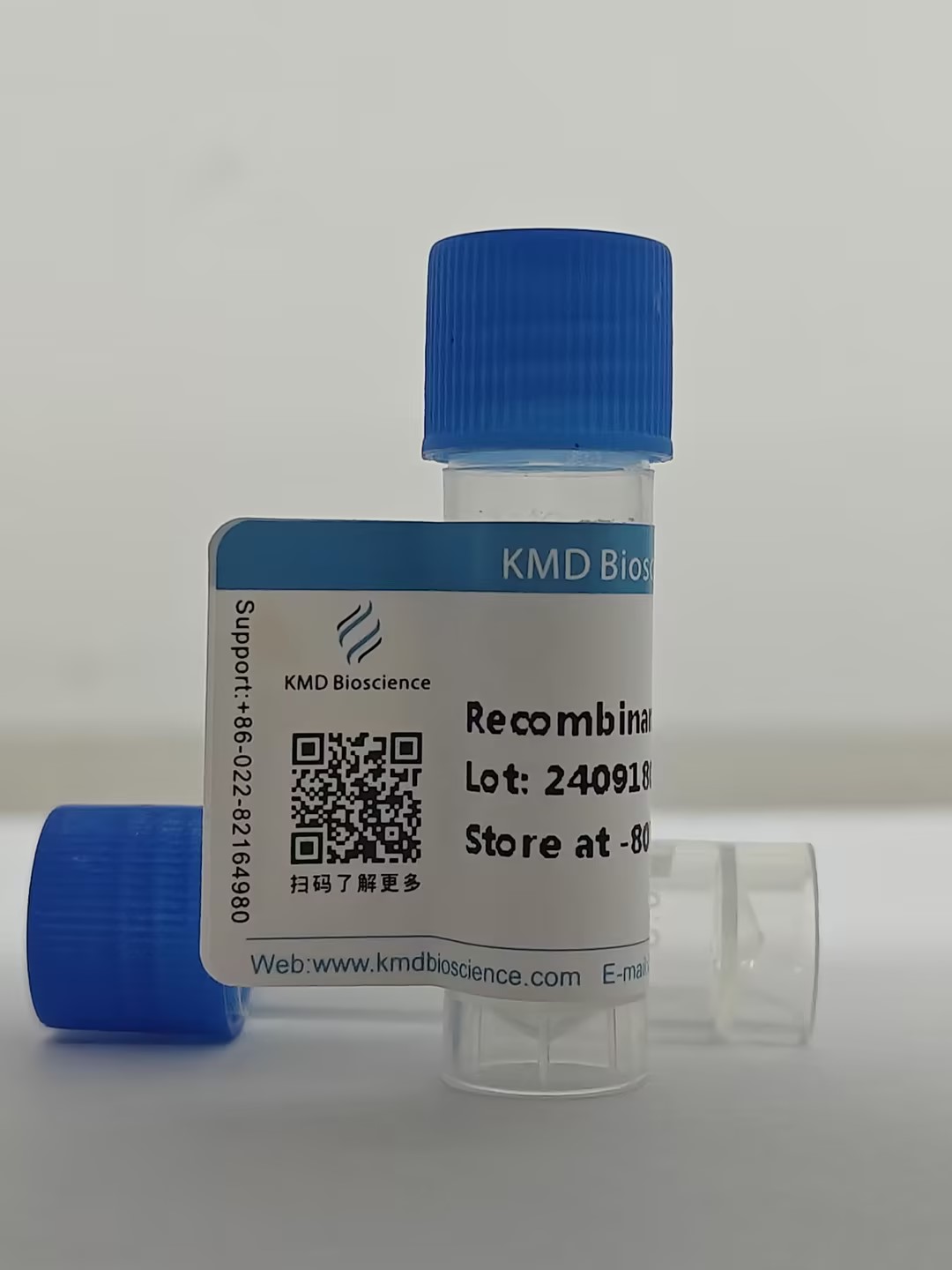
Rabbit Anti-OXGR1 Polyclonal Antibody
-
产品编号
PAV2883
-
别名
oxoglutarate receptor 1, CAON2, GPR80, GPR99, P2RY15, P2Y15, aKGR
-
目录价格
InquiryRMB
-
规格
- 100ul

| Alias | oxoglutarate receptor 1, CAON2, GPR80, GPR99, P2RY15, P2Y15, aKGR |
| Catalog Number | PAV2883 |
| Product Description | Rabbit polyclonal antibody raised against human OXGR1 (2-oxoglutarate receptor 1). Affinity purified from rabbit antiserum by antigen-specific affinity chromatography. Validated applications: WB, ELISA. Supplied as liquid in PBS containing 50% glycerol and 0.02% sodium azide at 1 mg/ml. |
| Molecular Name | OXGR1 |
| Species | Human, Mouse, Rat |
| Host | Rabbit |
| Size | 100ul |
| Clonity | Polyclonal |
| Protein Family | 其他受体 |
| Concentration | 1 mg/ml |
| Purification | affinity-chromatography |
| Formulation | supply in PBS containing 50% glycerol, and 0.02% sodium azide. |
| Background | This gene encodes a G protein-coupled receptor (GPCR) that belongs to the oxoglutarate receptor family within the GPCR superfamily. The encoded protein is activated by the citric acid intermediate, oxoglutarate, as well as several cysteinyl leukotrienes, including leukotrienes E4, C4 and D4, which are implicated in many inflammatory disorders. In mice, a knock-out of this gene leads to middle ear inflammation, changes in the mucosal epithelium, and an increase in fluid behind the eardrum, and is associated with hearing loss. Alternative splicing results in multiple transcript variants. [provided by RefSeq, Oct 2016] |
| Immunogen | This antibody was raised against from part region of human OXGR1 protein (UniProt: Q96P68) |
| Application | WB, ELISA |
| Recommended Dilution | WB 1:500-2000 ELISA 1:5000-20000 |
| Gene ID | 27199 |
| Tag | Unconjugated |
| Cross-reactivity | Human, Mouse, Rat |
| Predicted Molecular Weight | ≈38.3 kDa |
| Storage Condition | Store at 4℃ for for short term storage. It is recommended to aliquote to ~10ul per vial and store at -20℃ for long term storage. Avoid repeated freezing and thawing cycles. |
| Shipping Condition | This product is shipped on blue ice. |
| Molecular Weight | 38.3 kDa |
| Cross-reactivity | Human, Mouse, Rat |
| Uniprot ID | Q96P68 |
| Note | Gene ID: 27199; UniProt: Q96P68; Chromosome: 13q32.1; Predicted MW: 38.3 kDa |
| Function | G protein-coupled receptor for dicarboxylates and amino dicarboxylates, such as alpha-ketoglutarate, itaconate and leukotriene E4. Ligand binding causes a conformation change that triggers signaling via guanine nucleotide-binding proteins (G proteins) and modulates the activity of downstream effectors, such as phospholipase C. OXGR1 is coupled to G(q) G proteins and mediates production of diacylglycerol (DAG) and inositol 1,4,5-trisphosphate (IP3). Activation by alpha-ketoglutarate produced by proximal tubule renal cells upon metabolic alkalosis initiates an intrarenal paracrine signaling pathway that drives transepithelial salt reabsorption and bicarbonate secretion by SLC26A4/pendrin-positive intercalated cells (By similarity). Also acts as a regulator of vasodilatation in vascular smooth muscle cells: following activation by alpha-ketoglutarate, couples to GNAQ/G(q), initiating a signaling that activates MYLK/MLCK, thereby promoting MYL9 phosphorylation and vascular smooth muscle cell contraction and limiting vasodilation. |
| Product Declaration | 本产品仅用于研究用途(RUO)。不能用于诊断或直接用于人体实验。 |
| Product Full Name | Rabbit Anti-Human OXGR1 Polyclonal Antibody |
| Target | OXGR1 |


销售微信

官方公众号


 0