Rabbit Anti-Polyclonal AntibodyP2/PABPN1 Polyclonal Antibody
-
产品编号
PAV2909
-
别名
poly(A) binding protein nuclear 1, OPMD, PAB2, PABII, PABP-2, PABP2
-
目录价格
InquiryRMB
-
规格
- 100ul
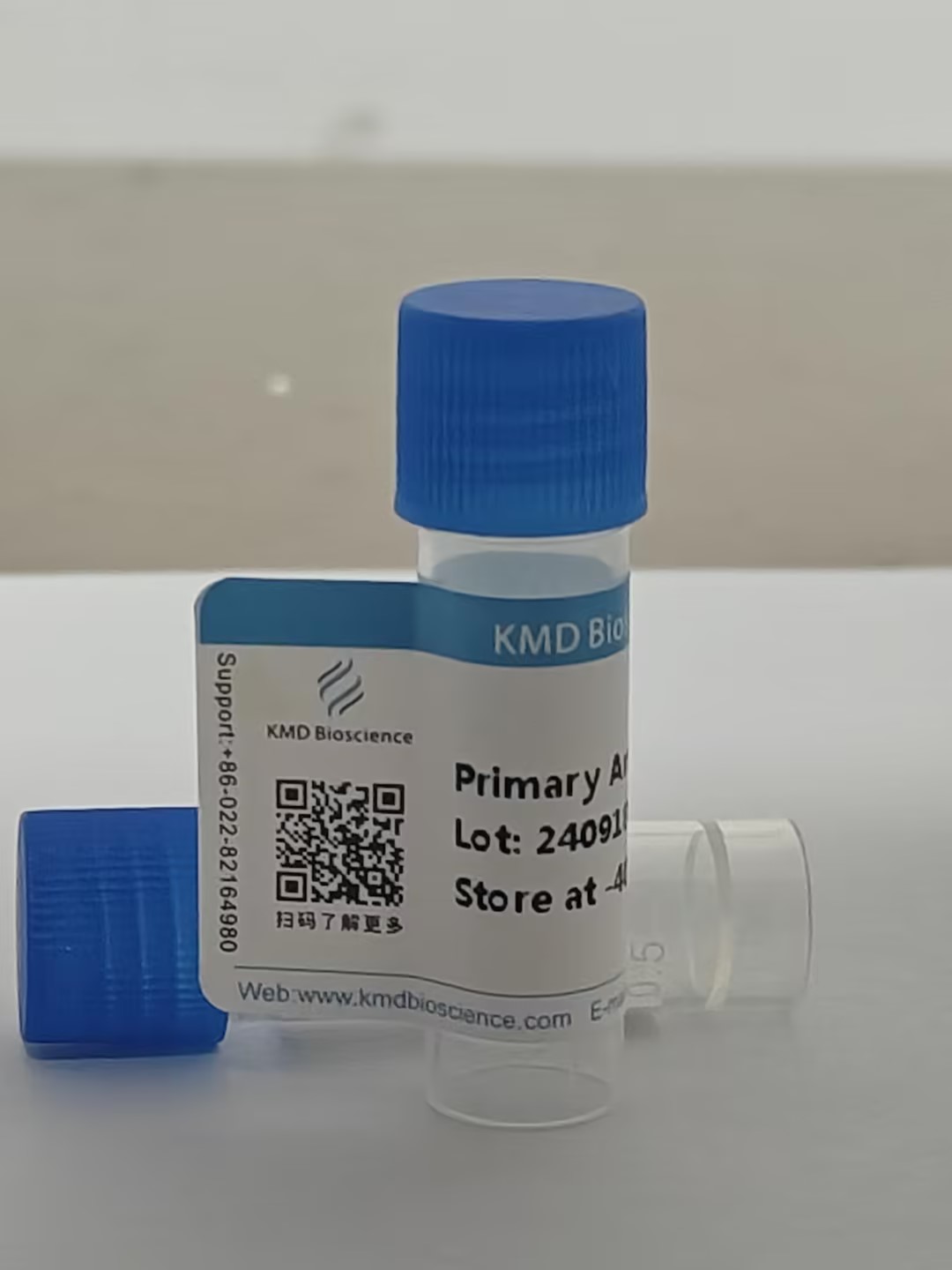
| Alias | poly(A) binding protein nuclear 1, OPMD, PAB2, PABII, PABP-2, PABP2 |
| Catalog Number | PAV2909 |
| Product Description | Rabbit polyclonal antibody raised against human PABPN1 (Polyadenylate-binding protein 2-binding protein 2)-binding protein 1)-binding protein II)). Affinity purified from rabbit antiserum by antigen-specific affinity chromatography. Validated applications: WB, ELISA. Supplied as liquid in PBS containing 50% glycerol and 0.02% sodium azide at 1 mg/ml. |
| Molecular Name | PABPN1 |
| Species | Human, Mouse |
| Host | Rabbit |
| Size | 100ul |
| Clonity | Polyclonal |
| Protein Family | 其他信号分子 |
| Concentration | 1 mg/ml |
| Purification | affinity-chromatography |
| Formulation | supply in PBS containing 50% glycerol, and 0.02% sodium azide. |
| Background | This gene encodes an abundant nuclear protein that binds with high affinity to nascent poly(A) tails. The protein is required for progressive and efficient polymerization of poly(A) tails at the 3' ends of eukaryotic transcripts and controls the size of the poly(A) tail to about 250 nt. At steady-state, this protein is localized in the nucleus whereas a different poly(A) binding protein is localized in the cytoplasm. This gene contains a GCG trinucleotide repeat at the 5' end of the coding region, and expansion of this repeat from the normal 6 copies to 8-13 copies leads to autosomal dominant oculopharyngeal muscular dystrophy (OPMD) disease. Related pseudogenes have been identified on chromosomes 19 and X. Read-through transcription also exists between this gene and the neighboring upstream BCL2-like 2 (BCL2L2) gene. [provided by RefSeq, Dec 2010] |
| Immunogen | This antibody was raised against from part region of human PABPN1 protein (UniProt: Q86U42) |
| Application | WB, ELISA |
| Recommended Dilution | WB 1:500-2000 ELISA 1:5000-20000 |
| Gene ID | 8106 |
| Tag | Unconjugated |
| Cross-reactivity | Human, Mouse |
| Predicted Molecular Weight | ≈32.7 kDa |
| Storage Condition | Store at 4℃ for for short term storage. It is recommended to aliquote to ~10ul per vial and store at -20℃ for long term storage. Avoid repeated freezing and thawing cycles. |
| Shipping Condition | This product is shipped on blue ice. |
| Molecular Weight | 32.7 kDa |
| Cross-reactivity | Human, Mouse |
| Uniprot ID | Q86U42 |
| Note | Gene ID: 8106; UniProt: Q86U42; Chromosome: 14q11.2; Predicted MW: 32.7 kDa |
| Function | Involved in the 3'-end formation of mRNA precursors (pre-mRNA) by the addition of a poly(A) tail of 200-250 nt to the upstream cleavage product (By similarity). Stimulates poly(A) polymerase (PAPOLA) conferring processivity on the poly(A) tail elongation reaction and also controls the poly(A) tail length (By similarity). Increases the affinity of poly(A) polymerase for RNA (By similarity). Is also present at various stages of mRNA metabolism including nucleocytoplasmic trafficking and nonsense-mediated decay (NMD) of mRNA. Cooperates with SKIP to synergistically activate E-box-mediated transcription through MYOD1 and may regulate the expression of muscle-specific genes. Binds to poly(A) and to poly(G) with high affinity (By similarity). May protect the poly(A) tail from degradation (By similarity). Subunit of the trimeric poly(A) tail exosome targeting (PAXT) complex, a complex that directs a subset of long and polyadenylated poly(A) RNAs for exosomal degradation. The RNA exosome is fundamental for the degradation of RNA in eukaryotic nuclei. |
| Product Declaration | 本产品仅用于研究用途(RUO)。不能用于诊断或直接用于人体实验。 |
| Product Full Name | Rabbit Anti-Human PABPN1 Polyclonal Antibody |
| Target | PABPN1 |


销售微信

官方公众号


 0